Author Archives: locuswest

First Focus Group Results …. coming soon!

On Tuesday of this week, we had a focus group with the purpose of getting feedback on naming our brewery.  It was the first time I’ve planned and implemented a focus group, so it was many things rolled into one, not the least of which was a great learning experience.

Like anything in life, preparation is the key.  It was something that I prepared myself for, and even knowing that there was a lot of work for something like this, I was blown away by how much work it actually took.  I did keep a total of the amount of time I spent organizing this focus group, and up until the minute things started, it was 48 hours of work.  Where the hell did 48 hours go you ask?  Let me tell you:  Organizing participants, preparing questions, meeting with the moderator, securing the space, getting the food and beverages, printing copies of questions and non-disclosures, etc, etc, etc.

The focus group itself went well in my mind.  There are always questions you would change, formatting alterations you would make, and slight differences you would make if you did it again.  For the second focus group that we are having this Sunday, I will likely only change one question.

A huge component of the focus group is your moderator.  Luckily I had the help of a real craft beer enthusiast and very personable, yet professional individual.  I can honestly say, that next to the preparation involved, the moderator can make or break the implementation.  Rebecca was so unbiased, and also so personable, and was able to take the outline I gave her, and worked with it in her own way.

The feedback was somewhat expected and completely unexpected all at the same time.  While I would love to go into the details, I will wait for our second focus group to complete before commenting on them.  What I can say, is that the results will help us pick the name that is right for our brewery.  What we do know is the name we pick will represent what we are doing, what words are meaningful and what name fits with the local market.

I will update everyone more after we have our second focus group on Sunday and get closer to having our list of names narrowed down to 2-4 finalists.

Those Floors are becoming a lot more stable

Another short post today, as I have a bunch of items to tend to.  We have been gathering quotes, engineers information, opinions, and mixing them all together with our budget and timeline and it looks like we are getting close to making a decision on our floors.

At first glance, our floors seemed like they were not solid enough to build and construct things on top of.  However, since this time we have continued to gather information and we are now more sure that we can make the floors work.  Like everything, its just a matter of how much money you want to throw at the problem.

The focus group is coming together nicely, and I hope we get the right mix of people attending the sessions.  We are focusing on craft beer enthusiasts, in hopes that they will help us with naming our brewery, and a few other minor details we are interested to learn more about.

Lots to do, and in the next week I will be sure to blog all about it.

Onto Phase #2 of Brewery Name

OK, so thank you to everyone that has sent in their name request.  We had an overwhelming response from the community, and we are grateful for this.  I think the name of our brewery is on that list, and I hope we can now move onto phase #2 in order to find out what the general public feels.

So we now move to getting feedback from a small group of individuals in order to move us towards naming our brewery.  If you would like to comment on any of the names on the list, please feel free to send me an email, or you can post a comment on this blog.  I would love your feedback and it will help us move onto the next stage.

For now, I am going to contact some people for a focus group, and hopefully you can make the dates that are available for discussion.

Lots of other stuff going on, not the least of which is making a decision in the next couple weeks on our space, and whether we are going to remove subjects or not.  My fingers are crossed and I hope that things continue to move forward as they have so far.

How Many Breweries are Enough in BC, Canada and North America

I often wonder how many breweries can a City, Province, Country and Continent support?  As an entrepreneur and soon to be brewery owner, the concern is always in your head that the market reached a saturation point with businesses.  Eventually, craft beer market share will stop coming from Molson, Labatt and other International giants.  It will indeed come from other like minded craft breweries, which means I can taketh and I can giveth.

In the United States, the Brewers Association indicates that there 2,538 breweries operating in the country as of June 2013.  It also states that there are an additional 1,600 in the planning stages.  If you take a 90% survival rate, that would make about 4,000 total breweries operating in the USA.  That is a lot of beer, and one would have to think, reaching the point of saturation.  In fact, you can read this article posted in the USA Today, which looks at this very question.

In Canada, best estimates put the number of breweries at about 300, and within 5 years, that number is expected to reach 400.  Where is the tipping point?  Well no one knows for sure, but not unlike our counterparts south of the 49th parallel, with every new brewery, we take another step towards saturation.

All of this plays in your mind when you open a brewery.  It fundamentally matters what you stand for, the type of beer you make, and how you put all these moving parts together to form your brand.  It would be my opinion that as the market gets more and more crowded, new breweries need to carve out a more focused niche.  It used to be that making a craft beer was enough of a differentiator, but with more breweries doing more unique beers, being uncommon becomes a good play.

It feels like this is the path that we are going down with our brewery.  It just seems to make the most sense to me, and when something makes sense, I usually jump in with both feet.  When I look at the breweries that have opened and experienced success, they all stand for something.

Parallel 49 – Always something different and unique, but merged with hitting the middle of the market

33 Acres – Clean, refined and connected to Vancouver

Red Racer – quality craft beer in a can that appeals to the middle of the market

Four Winds – New world innovation influenced by old world tradition

Do you think Vancouver could support a brewery that focused on beer from one area of the world?  What about a brewery that focused on Low Alcohol beers or Gluten Free Beers?  Or do you think a brewery that focused exclusively on Sour beers, or different types of Saison would do well?  What about doing what Steam Whistle does, and only make one beer?  What about a brewery that only sourced local ingredients?

These are some of the options that are coming into play with new breweries, and ones that we have kicked around.  At the end of the day, I am going to brew beers that I believe in, and hopefully others like them as well.  There really is no other way to go, and to be honest, doing otherwise would be somewhat disingenuous.  As for the number of breweries, this is not something I can worry about.  It would be counterproductive for me to focus on what others are doing, at the expense of conveying what we are doing.

Back to my Excel spreadsheet I go.  It seems that I am spending far too much time making the numbers work.  My topic for next time will be the tasting room and what are some of the decisions and qualities that are important in designing one.  For now, I will leave this parting thought.  I hope that we are a ways from saturation, for it will make the task before me that much more attainable.

Nothing to do but Everything to do

Some days I feel like there is nothing that needs to be done in particular.  Whether its marketing, the business plan, finances, cash flow, collecting money, etc., there never seems to be a timeline on getting some of these things done.  But when you take a moment and look from 50,000 feet at what you have to accomplish before you sell your first beer and HOLY CRAP, there is a lot to do.

All of this means that starting a business, and in particular this brewery, results in having a lot on your mind.  I’m not talking about when you are in the shower, or making dinner …. I mean in the middle of the night, or when you should be engrossed by something else like a CFL game, or the company of a great friend.  It is so easy to let thoughts of your business, and the work that is undone, creep into your mind and send you on the path of mental anguish.

Tonight is a great example of that.  I would like nothing better than to sit down and turn my mind off the task at hand, but there are a few things on my mind:  I have a Brand Guide that needs attention, emails to investors to follow-up on progress, work with an architect on the space we are trying to lease, a meeting on Monday with our Accountant to prepare for, documents that our Lawyer needs returned, emails that need to be answered, a business plan that needs to be updated before it is PDF’d, decisions on equipment that need to be made, more requests sent to suppliers and manufacturers for additional quotes, contractors that need to be interviewed for work required, and most importantly this blog which needs to be attended to (I will get a check on that after this).

All of this makes me realize that Entrepreneurs are both made and born.  You have to like the  chaos that comes from this process …. the constant juggling and prioritizing of tasks, working in the trenches, while at the same time, working like a VP, and the constant struggle between what you really want to do, and what the market wants you to do.  You also have to be able to turn it off, and it is something that requires constant reminders of this.

So with the end of this blog, I am going to make a to do list for tomorrow, and turn-off my mind.  I am reminded what one of my good friends and mentors tells me …. starting and running a business is a marathon in that requires a balance of running harder to stay ahead of things and laying back to regain some strength.  Tonight might be some time to regain some strength.

Lease versus Buy Equipment

Well if needing to raise $1.2 million dollars isn’t enough of a mountain to climb in order to open a brewery, don’t forget the line of credit of about $250,000 you will need to keep your operations solvent until you break even on a monthly basis.  For our operations, we are projecting about 16-18 months before we break even.  When you really look at the reality of opening a brewery, you almost think it would be better to head down to the River Rock Casino and see if you couldn’t do better than owning a brewery.

There is one major way to mitigate the risk associated with starting a brewery:  Lease your capital equipment.  It is a novel idea that can amortize the capital cost of equipment over a longer period of time, and help ensure short term liquidity during the crucial first few years of owning a brewery.

My personality is not one that is geared towards leasing anything.  I have never leased a car, as I think it is better to own something outright with a loan, than it is to just pay for use.  In fact, throughout my career as a salesperson, I never leased a car.  So leasing the brewhouse is not something that I ever thought was going to be an option.  But I have been told by more than a few people that there are some benefits, so lets take a look at the Pro’s and Con’s of leasing:

Pro’s of Leasing Equipment:

  • Leases are tax deductible:  The whole lease payment is a straight write-off, which is easy
  • You can afford a nicer/bigger/more reliable system as the cost will be amortized over a 5 year period (in our case it would be)
  • Few upfront costs associated with lease and the details of taxes, etc are handled by someone else
  • Don’t need a down payment, as all the actual payment of the equipment is handled by the leasing company
  • Spread the cost of the equipment from upfront when you have zero revenue, to a time period when (in theory) you have good revenue in order to pay for the equipment.
  • At the end of an equipment lease, you own the items you leased.  There is no payment like with a car, you simply own the stuff you bought.

Con’s of Leasing Equipment:

  • If our business fails, we are still bound to pay for the lease until it is complete, and the equipment is owned by the bank, meaning our biggest asset is in the hands of someone else until we pay it off in full
  • With a lease, you may have additional cash during the first couple years, but it makes cash flow a little harder in years 3-5 as you have an extra charge on your cash flow
  • Once you sign a lease, you are bound to the lease
  • Over the course of a lease, you spend about 5% of the total amount owing per year in payments to someone else, which can add up quickly when you are looking at $500,000 in leasing.

I am sure there are other points for and against leasing equipment.  When I spoke with my accountant, he said something that stuck with me, and I hope to keep in the forefront of my mind when it comes to this kind of thing:  Do whatever makes your cash flow better.  Simple enough right ….. well not so fast.

Like everything in this process, and I sound like a broken record, there is a decision to make.  Sacrifice better cash flow in years 1 and 2 for worse cash flow in years 3 to 5.  Or vice versa!  It seems to be a universally known that a lack of cash sinks businesses.  Cash Is KING!  Well, under that scenario, a lease agreement seems to make logical sense.

So into my cash flow I went, and put in leasing equipment, and voila out popped the results!  Enter dramatic music here …. It didn’t work out as well as I thought it would.  In fact, it saddled operations down the line with those extra payments, when that cash (and lost money on interest) could be better allocated to other facets of the business.  Help!  I have a meeting on Monday with our accountant, and I hope to get his expert advice on what we should do.  I wonder which way he will go?  Do you have an opinion?

In my opinion, I think we will lease some of our equipment, but at this point I don’t believe leasing all of the equipment is worth it.  The $10,000 per month in lease costs help in the short term, but not the long term.  One thing is for sure …. its just another decision to make, and one that is crucial to ST and LT success of the brewery.

When to quit my paying job for one that costs me money?

One thing that I tended to overlook was the transition from working at my current job, to working at both jobs and then making the jump to the brewery full time.  It is a delicate balance, and one that had its ebbs and flows, so it can be a hard thing to judge when the right time is to make the move.

My journey started about 5 years ago, when I just couldn’t shake the dream of wanting to start a craft brewery.  I have always been an entrepreneur and at various times in my life, I have tried starting businesses, intermingled with jobs working for corporations, other entrepreneurs and multi-nationals.  There was the Crepe restaurant that I tried starting during University with my good friend, an advertising company we tried starting after University, and a destination based travel company I tried starting in the late 90’s.  All didn’t get off the ground, and looking back on those experiences, I am glad, as they would have likely prevented me from following this passion.

It was about 5 years ago that I needed a work/life plan to start a brewery.  I knew that there is a whack of work involved in starting a brewery, a lot of cash needed, and often that work revolved around times that were inconvenient to having a 9-5 job.  Most importantly, I knew that you couldn’t stop doing everything in favour starting a craft brewery, as the road to opening your doors is several years long, and that means no salary for a long time.  So I wrote my real estate exam, and became a realtor.  It was a tough few years, one that made me question what I was doing to my family and my life that seemed so normal and easy up until that point.

You see our life was comfortable.  Both my wife and I worked for large companies, which meant we brought home regular income, and had for the most part 9-5 jobs M-F.  Well when you get into real estate it is often the opposite of that.  Evenings and weekends, and work is excessively seasonal in the Spring and in the Fall.  This can be a real challenge when you have kids and friends who work in other M-F 9-5 jobs.  But it was my dream to start a craft brewery, and as such I thought the best way to have flexibility to start a brewery was to be a realtor, as the hours were flexible, there were some great skills I would learn, and it would provide me a little cash to pay for some of the expenses along the way.

Having walked this path for the past 5 years, there have been many highs and lows.  At the end of the day, there is no perfect job to have when you are looking to start a brewery, and depending on your situation, there are likely a variety of options that are best for you.  I have found the flexibility with my schedule and complimentary hours a positive in working real estate, and the lack of regular income and seasonality in work required with real estate the biggest challenges.

So all of this leads me to question when I should quit my real estate career in favour of working for the brewery full time.  The sooner I move to the beer business full time, the better my business will be prepared and planned.  The flip side is the longer our family will have to go on one income, and the greater the stress on my wife and kids.  I really don’t think there is an answer to this question, but I do feel like I am getting close to that point.  The 60 hour work weeks used to be enough to fit everything in, but now they are insufficient.  The space we are looking at leasing is requiring a lot of work and attention to detail, not to mention money.

I can see all of this leading to a point where I will be exhausted, broke, and likely as happy as a kid in a candy store.  I hope that I have the wisdom to make the right decision on when to break away from real estate, and focus on the brewery.  It doesn’t feel quite right yet, but I expect by the end of the year, when we have our space leased and operations set for a grand opening in 2014 sometime, the right time will emerge.

What is under the floors?

One of my recent posts discussed the floors in the building we are looking to lease.  You can read it by clicking here.  Essentially, the floors are in need of some repair and upgrades, and we are going through the process of figuring out how much it will cost versus what we have in the budget.

When I look through our financials, we have a set amount of money to spend on pouring cement, upgrading floors and making changes to the foundation.  If we want to spend more money than is in this pot, we either have to take it from somewhere else, or we have to raise more money.  Raising extra money is not ideal for 1 main reason.  If you indicate to investors that you are going to need $1,000,000 to start, and you value your company based on that, it is hard to go back to them and tell them that the shares they thought were worth $1.00 each, are now worth something less, like $0.80 each.

Given this, we have raised what we think is a realistic number and based our valuation on a few worst case scenarios.  Hopefully only a few of these come to fruition, and you are left with a little extra cash to spend on items you were off in your estimates.  So all this leads to our floors:  We have about $75,000 for flooring in our space, and after what we found out today, it is likely going to be a little low.

So where to take money from?  The only logical place is either wages or marketing.  That means either I am going to have my salary delayed even longer, or we are going to rely on word of mouth for advertising.  Neither option is ideal, but what else can we do?  We can’t cut equipment costs, and god forbid we cut our raw material costs!

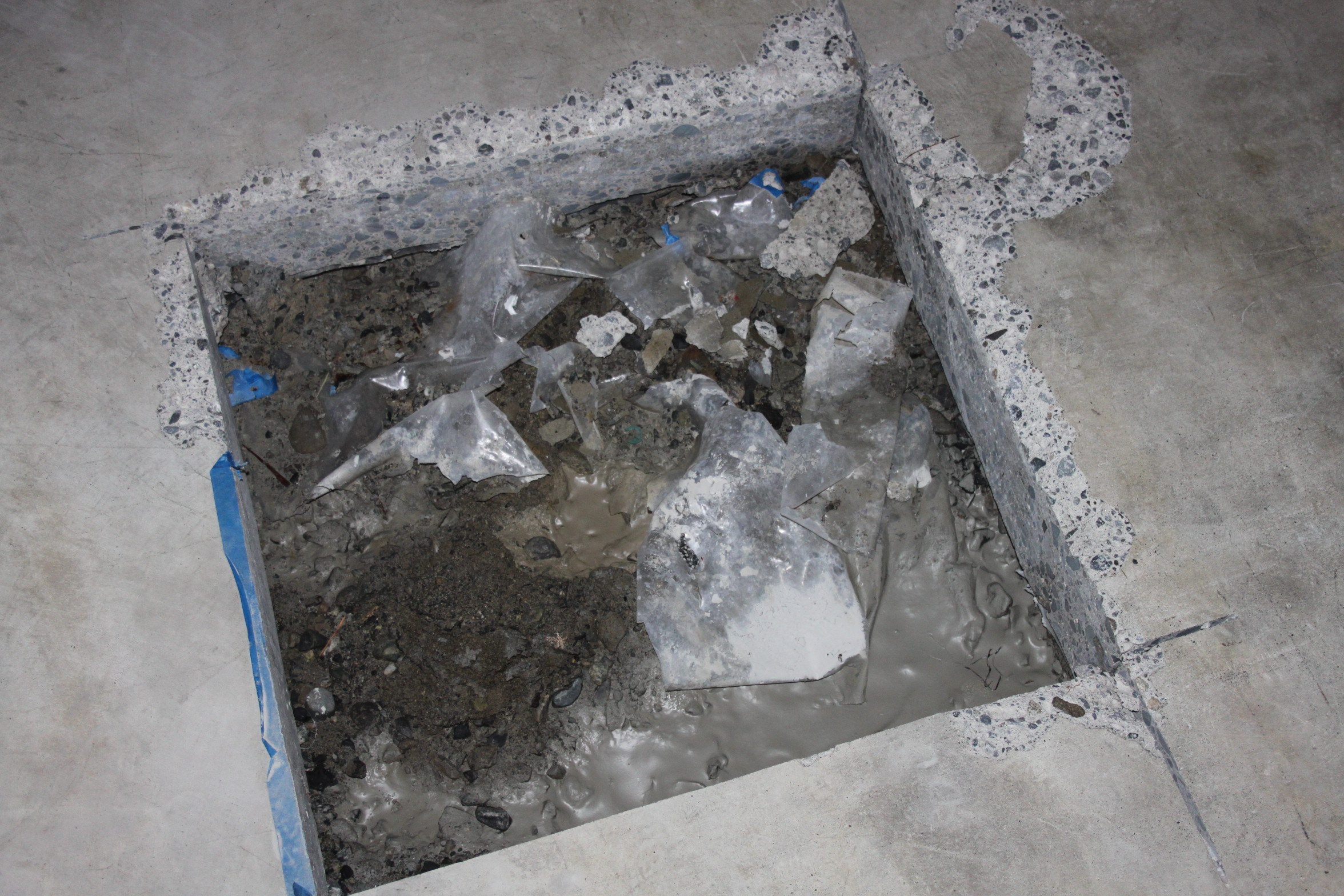
Anyhow, we cut and opened the floors in our space, and I wanted to share those pictures.

IMG_6176


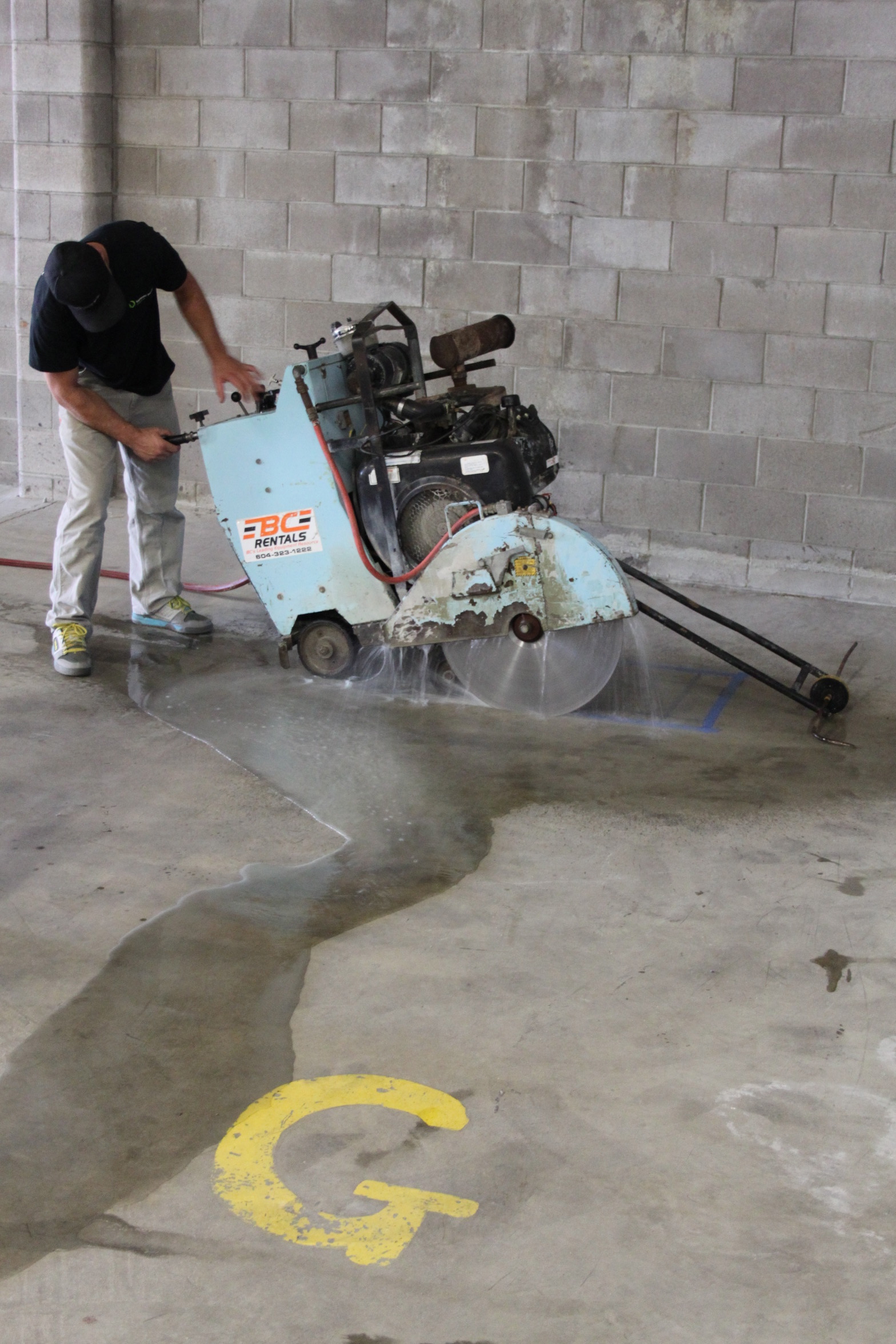
As you can see, we had to cut the floor in order to see what’s below.  Here is an action shot of the machine in use.

IMG_6173


You can imagine how loud this bad-boy was.  It did the trick and gave us a nice little .75 metre x .75 metre section to see below.

IMG_6182


Here is the hole at grade.  It looks like there is a gap of about 5 cm’s between the top of the substrate and the bottom of the slab.  In other words, there is nothing holding up the floor …. it is essentially a suspended slab = Not Good!

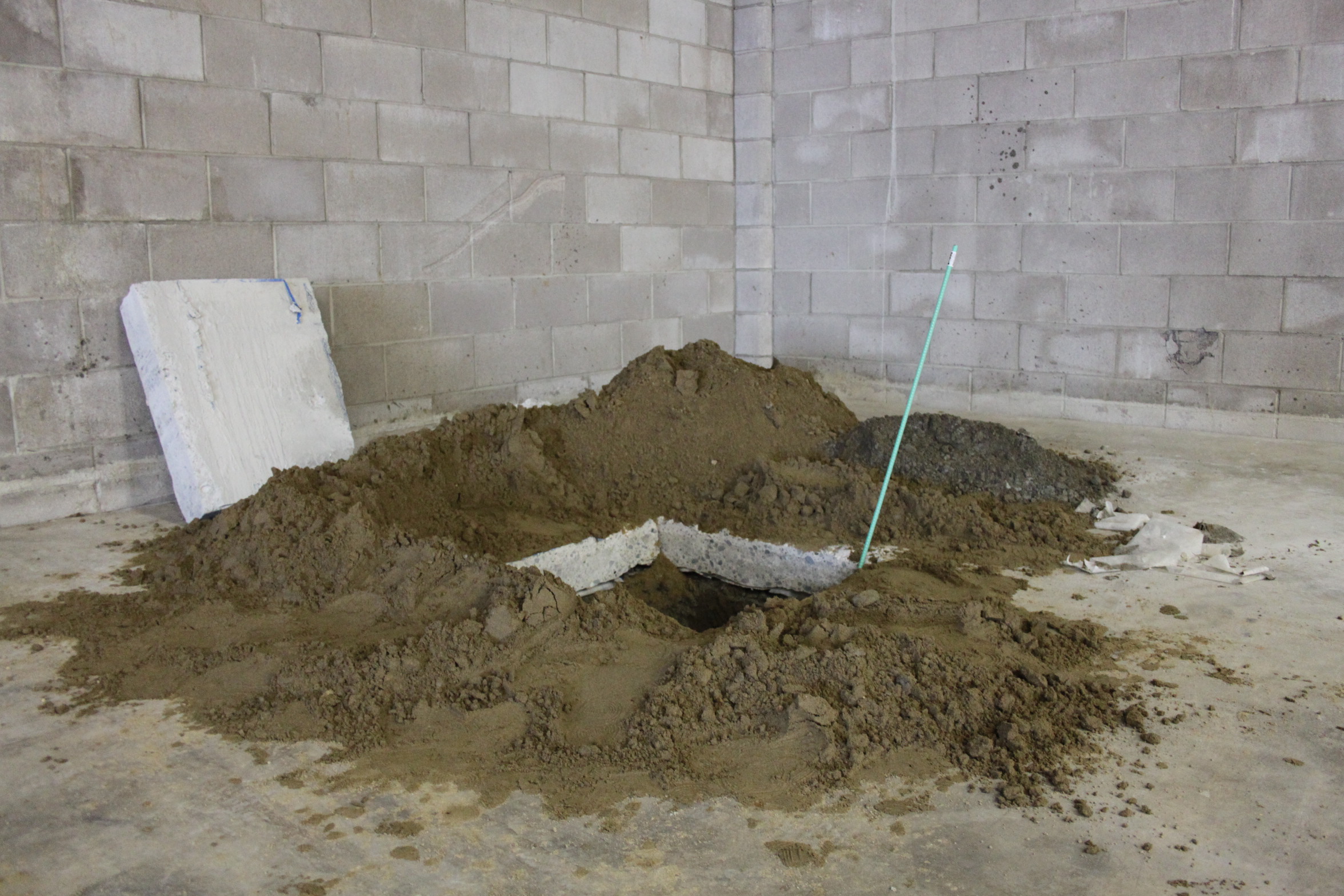
IMG_6192


A lot of soil came out of this hole …. I was looking for solid ground and could find none!  Finding hard ground would be great as we could use this ground to put new footings in, and then put a new slab into the space; however, ……

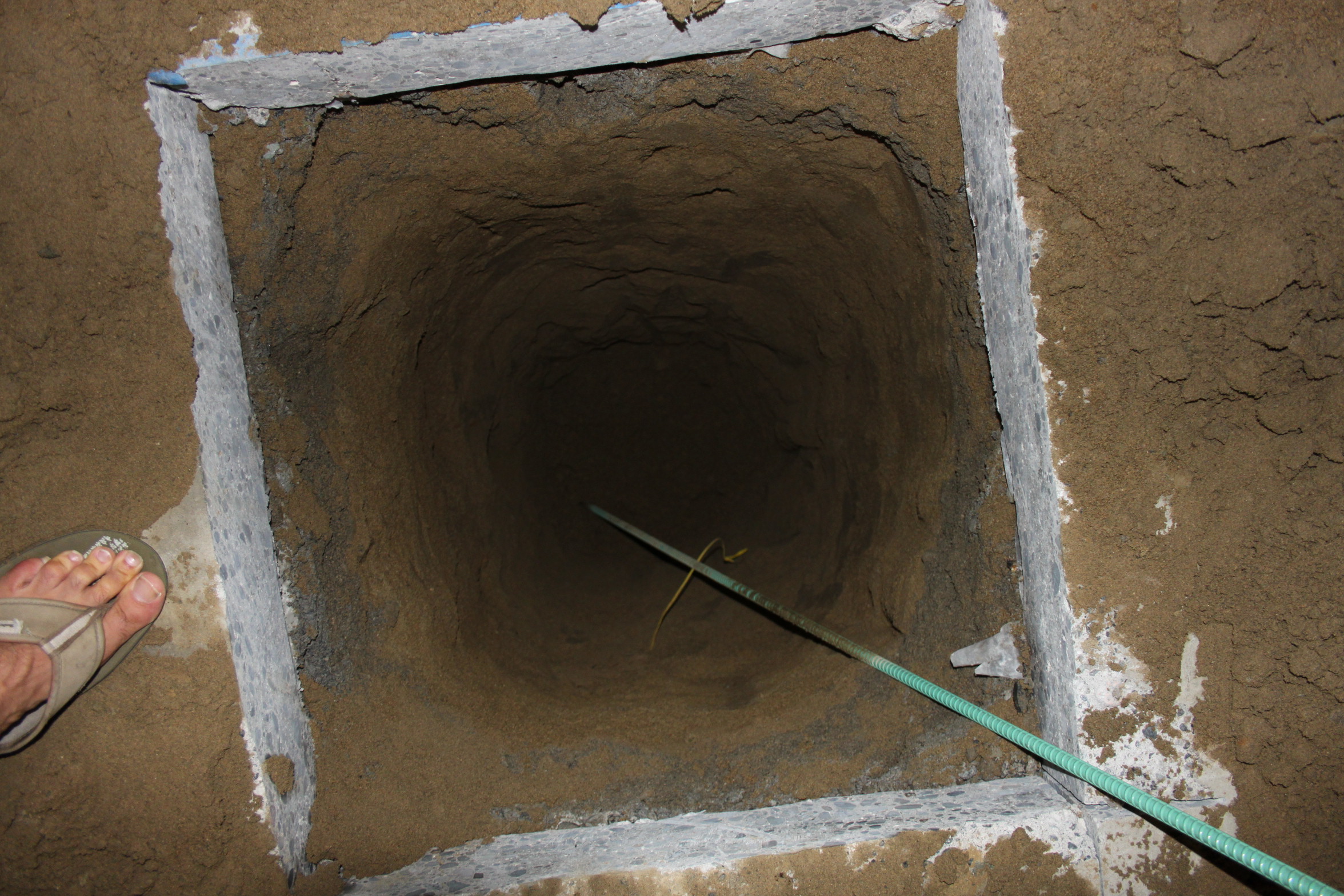
IMG_6185


I dug for 2 metres and still couldn’t find hard ground.  Shovelling the last of the dirt out was next to impossible , not to mention how dangerous is was being in such a deep hole, so I could dig no further!  The next step is to use the probe and see if you could hit solid ground below.

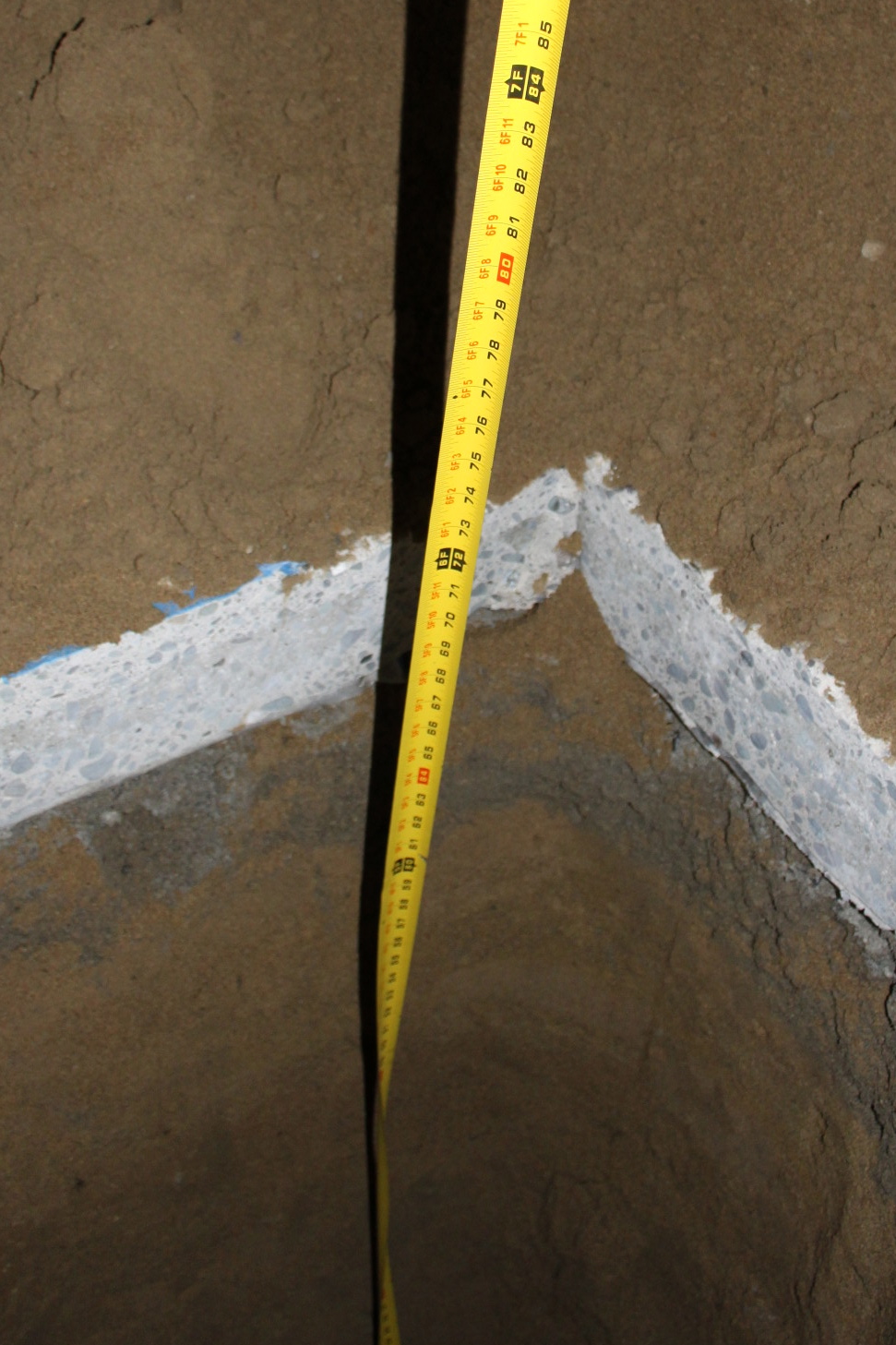
IMG_6190


OK, so we went to the bottom of this 2 metre deep hole with the probe, to see if we could hit solid ground.  The probe went down and down and down …. all 2.5 metres of it.  There was no solid ground to be found …. WTF.

So what this means is that there is about 4.5 metres of fill under this slab, with no sign of firm ground.  This is very upsetting and something we were really disappointed to find out <insert sound of air leaving a balloon>.

What does all this mean.  Well like everything else with opening a brewery, it means likely more money and time, and it will also mean that we need to re-evaluate this space.  If the potential cost of fixing these floors is much beyond our budget, we won’t move ahead with this space.  So now we will wait for the Geotechnical Engineers report, in addition to the Structural Engineers report, but at this point, its not great news.

As you can tell, everything is resting on these floors.

The Dance of Negotiating a Deal for a Warehouse

There is a delicate dance involved in negotiating a space for our purposes, one that I have become too familiar with from the failed negotiations of spaces we desired in the past.  The dance revolves around meeting the needs of our business, juxtaposed with the needs and desires of the landlord, with our selfish desire to open the brewery sometime before this decade ends.  When a deal favours one party measurable more than the other, a deal is usually not going to come together.  However, when both parties are reasonable and take a collaborative approach, there is hope for a deal to be struck.

Space Photo

A sneak peak of the space we are looking to lease.

The landlord that we are currently negotiating a deal with is one of the most fair, trustworthy and understanding landlords we have come across so far on our journey.  Compared with some of the landlords we have dealt with in the past (we have tried to secure a space for over a year), he is a breath of fresh air.  Let me give you an example of how the other half operate.

About 6 months ago, we came across a property not far from Coal Harbour Brewing, Powell Street Brewing and Parallel 49.  It was a great space that was inspiring, unique and located near these other breweries, so it would help to keep our tasting room bus.  We acted quickly, and within 2 weeks of this property being on the market, we viewed it 2 times, had our architect visit and perform a code review, and we were in and out of the City of Vancouver asking questions and understanding the space.  Before we made our offer, the landlord’s realtor and our realtor discussed the basic framework of the deal, and everyone seemed to be on the same page.  So we made our offer …. and this is where things came off the rails.

The landlord changed his mind about a few of the key details, like increasing his asking price, the amount of work he would do and the terms of the lease after we made our offer.  So we pondered his change of heart, and decided to go back with another offer reflecting his change of position.  The offer was very generous and gave the landlord everything!  In other words, all the changes he asked for we decided to offer.  We expected to have a deal once he read our new offer.  Well wouldn’t you know it, he changed his position again.  This time, he told us he was not going to pay for any freight elevator upgrades, when he told previously he would.  In short, he got greedy.

So what did we do?  We walked.  Yes that space was perfect, and yes we would have been successful in that space, but at the end of the day, we didn’t want to deal with a jerk on a regular basis.  It was tiring and too emotional dealing with him, so we moved on.

And are we ever glad that we did move on.  Now we are looking at a better space for our operations, with a landlord who is willing to work with us, instead of in opposition to us.  The stress and emotion have left the process, and considering all the stress involved in starting a brewery, this is a good thing for my life.

Without putting a jinx on us <touching wood>, we are in the final stages of negotiating with this landlord.  We hope to work out a deal, and with a little more exploration and understanding of this space, we will hopefully sign-off on a deal in the next few weeks.  We are optimistic, but if our past experiences have helped us understand this process, we won’t be overly alarmed if it falls apart.  A deal isn’t a deal until the cheque is signed … and probably clears at the bank.  On Monday, we will be getting a look under those floors, and hopefully take a huge step to towards finding a dancing partner.

Everything rests on the floors … Literally!

When you start out with the dream of opening a brewery, there are a bunch of things that you dream about.  For instance; where you are going to brew your beer, what your brand will look like, how good it will to be your own boss, and most importantly what kind of beer you are going to brew.  Further down the list, you think about other details like cans vs bottles, unitanks vs fermenting & conditioning tanks, or what kind of delivery truck you are going to have.  Then there is a bunch of items that you generally don’t give much thought to:  When to have your fiscal year-end, do you want your coasters to be printed on one side or both, and who your accountant is going to be.

Even further below this is flooring, one of the things you tend to not think about at any stage of starting a brewery, other than when you are looking at warehouses to lease.  Well you probably guessed it, we are at that time and place now.  We have submitted an offer on a space to lease, and we are currently negotiating back and forth with the landlord.  We are hopeful that things are going to move ahead, so we have really started to focus on the details about this space.  Important considerations when you think about having a lease for 10 years.

You see, a floor in a warehouse is nothing like a floor in a house …. which is the only real reference point I have for this kind of thing.  A floor in a house is usually flat, and if it isn’t, you make it flat, put in the flooring and underlay of your choice and voila!  A floor in a warehouse is a much different beast.  Most importantly, the floor in a warehouse needs to take a load.  The floors usually have a PSI rating, and that determines how much of a load you can put on the floor.  In other words, a higher PSI rating for a floor is a good thing in the world of brewing, as you are putting several metric tonnes of tanks and other equipment onto it.

Well the floors in the warehouse that we want to lease aren’t the greatest.  They have settled in several areas, and they don’t have a high enough of a PSI rating.  This means we are going to have to fix this problem if we lease the space, and that costs a lot of ‘jack’.  The most important question we have to ask is why have the floors settled?  There are 3 possible reasons for this:  1) The preparation for the floor was done poorly in the first place.  2) There was organic material left in the ground (like old trees and roots), and they have wasted away to nothing causing the floor to settle  3) There is some problem that is slowly washing away the substrate leaving a nothing where there was once material.

Well this is the point that we are at now.  Do we move forward with the space, knowing that the bill for the floors could be somewhere from $50,000 to $200,000 (and by the way we only have $75,000 in our budget), or do we say everything else seems really good about this space, but the floors are too much of a question mark, so we walk away.  This is the question that we are faced with this week.  It is both an emotional decision for me (I love the space and want to get this brewery off the ground) and also a business decision (I have to do what is right for my investors).

I am hopeful that we have the wisdom and support from engineers and other professionals to make the right decision.  As you can tell, the road to starting a brewery is full of pot holes and hazards.  But if you can successfully navigate those things, then the reward is greater than most anything else in the world.