Tag Archives: Parallel 49 Brewing

Floorplan Update and Best Practices

Some of you may have come across a story written by Greg Clow of Canadian Beer News.  If you live in Canada and you are serious about beer, you should be checking his website on a regular basis.  Click here to link with our story and Canadian Beer News.  His article focused on Strange Fellows operations and what our full floor plan will look like when complete.

I have included both the layout we have moved forward with as well as the side profile of the space, so you can get a sense of the way our operations will look.  Not unlike anything else we put out there, things will change somewhat as we move ahead; however, 90% of what is on paper here will be represented in our build-out at the space.  Once you commit to submitting building, electrical and mechanical permits, you are also committing to what you have on paper.  So in other words, the size of a window in our tasting room that overlooks the brew house may get bigger, but we have committed the location for the bathrooms, the trade waster interceptor and the trenches.

Brewhouse Layout March 2014

Brewhouse Profile March 2014

We have allocated a total of $12,500 for permits throughout this process.  I have blogged about them a little bit under The Process of Starting a Craft Brewery, subcategory X:  Government Stuff.  There are lots of permits you need and getting them all in a timely manner is important.  To be honest, the process of preparing for permits and approval is one of the keys to getting this process right.  In short, for your business to move forward you need to submit for your permits in a timely manner, with information that is well thought out, thorough and correct.  Changes or missed steps here will cost you down the road.  Read more about permits at the page linked above (and I will add more details in the next week).

Anyhow, coming full circle here, our floor plan was a real labour of love.  Like any decisions you make with a partner, there is give and take.  However, when you add in an architect, mechanical and electrical engineers, a general contractor and your finances, you get a mish-mash of opinion and information.  You can never make a decision without effecting every other decision you have made in the past, and every other decision you will make in the future.

Some of the keys when creating a floor plan are as follows:

  • Keep everything as central as possible.  The longer runs you have for any electrical or mechanical, the more cash you will bleed.  For us, moving our main electrical panel 10 feet saved us $3,000.  So you can see that small changes can make a big difference.
  • Plan for the future, but prioritize getting to day 1.  It is important to think a couple of steps ahead here, at least that is what I have heard from other breweries, but don’t lose sight that you need to get to day 1.
  • Look to save money at every step.  Ok, maybe you are better at this than I am, but we are in full cash saving mode, and we feel like we have been for a long time.  Any chance we can save money on something, we are doing it.
  • Tasting room and Retail area.  A huge part of all these breweries starting up in Vancouver is the ability to sell your products from your business.  It takes what was once an impossible task, and makes it so much more realistic of an opportunity.  So make sure you design a space that works for your brewery.  For us we wanted something intimate, open to the brewery, and simple.
  • Work with sub trades early in the process.  You don’t have to pick who you are working with, but bouncing plans off them will give you real world answers to questions you have.  It was also help you find savings and efficiencies in your space.
  • Another dilemma on decisions.  You can have things done quickly, you can have things done for your budget, and you can have things done inline with your dreams, but at best you will get 2 of these things, but most of the time you will only get 1 of these things.  What will you pick?
  • Call the room where you mill your grains a “grain cracking room”.  Trust me on this one, it will save you a bunch of headaches at the City
  • Depending on if you are focusing on production or focusing on tasting room/retail sales, your layout may be different.  For us, we are a production brewery first, so the layout and design of the space tried to take this into account as much as possible.  Process workflow, material in and material out, future expansion are all important to us, and are reflected in our space.
  • Keep your cooler close to the tasting room.  Iain has so much experience with this kind of thing, that he is adamant that these 2 things need to be connected.  He talks about the shorter the run of lines, and being able to connect our taps to tanks instead of kegs will save us heaps of time.

What really gets us excited about our space is the connection between the tasting room and the brewery.  When you are sitting in our tasting room, you will quite literally be 10 feet away from the brewhouse.  Want to watch Iain add hops to a brew, just sit back enjoy your beer and watch from your perch.  You will also be able to have a first hand view of the barrel storage area, which we think is a really cool thing.  We also think the art gallery will add a nice connection to the local community, and we hope the growler and retail area will have good process flow so as to not back-up too much.

As I have always said, Iain is really good with this kind of thing, so if you have questions about how to lay your brewery out, feel free to contact us.  At the end of the day, follow your instincts on the way things should be.  Whether you have experience with this kind of thing or not, make sure you follow what you would want as a consumer.  You will deal with enough people along the way that aren’t into craft beer (like contractors, architects, etc) that their opinion will help to balance yours out.  Stay positive and you will find the way.


kajdfjaklsjfkasjfklasdf
A Crushing Day for Us ….

Well, the last 36 hours has been full of angst on behalf of both Iain and myself.  We finally received a detailed budget from our general contractor, and to put it bluntly, we are going to be way over budget on building our brewery.  It is an extremely bitter pill to swallow, especially after the increases we have made throughout this process to our budget.  At the end of the day, we are building a much larger brewery than we anticipated, and with a larger brewery comes bigger costs.

When I look back at my old copies of the business plan, I have to chuckle to myself as I once thought the retrofit of a warehouse, not including equipment, was going to cost about $400,000.  I look at that number and can’t help but think how naive I was.  That is both a good thing and a bad thing.  If I knew how much this endeavour was really going to cost I might have passed on following this particular dream.  I thought the $400,000 was enough to put up some walls, trenches, upgrade power, and put all the equipment in.  Boy was I wrong.  This was about 2012 when I was really starting to get into planning this brewery

Fast forward to late 2012, and after much encouragement from other brewery owners that I met with, we increased this amount to about $550,000.  In my mind, this was an increased of about 30% over my initial budget, and I thought this would be plenty.  But as you learn more about what is required to retrofit a warehouse, the number keeps getting chipped away.  All of a sudden, the additional money that came with a bigger budget seemed to have disappeared.

Fast forward again to early 2013, and it was time to increase the retrofit budget again.  It just seemed impossible that with tasting rooms and their pending approval, along with the realization of additional costs with most spaces, that we could retrofit a space for any less than about $650,000.  At the time, this seemed like a good number, and even included a sprinkler upgrade and water line upgrade.  We figure we would be free and clear, so we charged ahead with this number in our mind.

It was at this time we started to inquire with investors about financing our brewery.  We based many assumptions on this cost, including how much we needed to raise from angel investors.  $650,000 seemed like our golden ticket to get everything we wanted.  So we charged on and hoped that we could what we wanted for this amount.

Then in the summer of 2013 we found what would eventually become our warehouse.  It was bigger than we really needed, but it gave us an excellent location, and most importantly a great landlord that wanted a brewery in his building.  We had our architect in, a couple contractors, some sub trades, engineers, etc and they all pointed to a retrofit cost of about $725,000, depending on a lot of things, such as electrical upgrade and flooring.  I have written about these items in the past, and they were huge uncertainties with out space.  So we moved forward with a newly increased budget of about $725,000 for a retrofit.

So fast forward to this week.  We met with our architect and general contractor to discuss the quotes they have received from sub trades (like mechanical contractor, electrical contractor, concrete slab specialist, etc) and also the budget from our general contractor on all the little things that make up our brewery.  All of this information, along with our wishes and desires, was put into a spreadsheet and at the very bottom of a huge excel file, there sat what was the anticipated retrofit cost of our brewhouse.  The total estimated cost for our retrofit was (drum roll) …. $925,000. 

It is hard to put into words what was going through my mind when this was presented.  It was like someone kicked me in the stomach …. and then kicked me again.  It was awkward for our architect and our contractor, as they could see that what I had believed and what I had assumed was wrong.  I must have looked like a deer in headlights.  Even now, I am fully consumed by frustration and anger that I just can’t seem to shake.  How is it possible that I ever thought $400,000 was enough?  It just seems plain old absurd!

We are so deep into this process, so far down the road, that there is no option but to find solutions.  For starters, it is very likely that the tasting room will have picnic tables and used chairs, be lacking any real artwork and design aesthetic, and have very little “extras” that other tasting rooms might have.  We have also had to dial back a few optional pieces of equipment that we hoped to have for the brewery.  Essentially, there will be a cascade of changes that are mostly out of our control, in addition to some extra cash that we need to raise from investors.

If I could pass some information onto others, I would make note of the following costs you might be looking at:

  • Electrical Upgrade – $75,000 and up
  • Mechanical – $125,000 and up
  • Tasting Room – $50,000 and up
  • Labour costs – $100,000
  • Development and Building Permits – $10,000
  • Concrete – $25,000 and up
  • Boiler and Installation – $35,000
  • Contingency – Easy 10% of your budget
  • Architect Fees – $25,00 and up
  • Engineer Fees – $20,000 and up
  • Management Fee (from General Contractor) – Cost plus 10%
  • Epoxy Flooring – $15,000 and up

Of course there is a long list of other small items, and they have all creeped up in cost, as we have a 9,000 square foot space.

In another few months, I will be sure to post all of our business plan online, so you can see for yourself what all the details in starting a brewery are.  For now, just know that what you think things will cost, will likely double from your initial estimates.  Just hope and pray that you have way more money than you need, or at least a network of people who would be able to offer some financial support to your business.

I hope to have some answers to our dilemma early next week, and I will pass along any notes I have on how to find savings in a budget that doesn’t seem to have a lot of wiggle room.


Bottle vs Can for a Craft Brewery

One thing we have long struggled with is the type of packaging we are going to put our finished product in.  Speaking with other craft breweries, we are not alone in the uncertainty we face in making this decision.  I have summarized the pros and cons of each decision, and I hope at the end of the post, you can give me some feedback on what is the best in your mind.  Starting your own brewery is a great thing, but it is important to have a firm sense of what you want, and merge that with the financial and marketplace dynamics you face.  In other words, what you started out wanting may not be what you end up with.

Really there are 2 choices that you can put beer into.  Either cans or bottles.  Before I dissect each of the options, here are some general comments.  I had long thought that cans were the clear environmental choice, but a few articles haver pointed me back in the direction of uncertainty.  Click here to read one article.  So with no clear winner on the environmental side, what about taste.  I hear anecdotally that people can taste the plastic in cans.  Does this mean they don’t pour the beer out of cans into a glass (yikes).  Also there is the image.  Is the wider market really ready for high quality craft beer in cans?  I know Steamworks and Central City have their beer in cans, and by all accounts do very well, but could you imagine a much smaller player, like 33 Acres or Bridge Brewing putting their beer in cans?  Would it make a difference at all to your perception of them.

Cans:   Cans are a good option for a brewery for a variety of reasons, but there are some downsides to them, which I have tried tried to summarize below.  Essentially, there are 2 options for can sizes 355ml or 500ml.  The smaller can is more North American while the larger can has a much more European feel to it.

  1. More transportable and lighter than bottles
  2. Beer keeps better in cans than bottles
  3. Per unit cost is less expensive than bottles
  4. About 66% of all beer sold in BC is sold in cans
  5. Government liquor stores want new listings in cans
  6. Canning lines are more expensive than bottling lines and notoriously more finicky.  We have quotes for a canning line at $90,000, and the price can go sky high from there
  7. Minimum orders for cans are about $30,000
  8. You need to figure out what beer you are going to sell and then hope the market likes it, as production time for cans is much longer
  9. Image of someone drinking from a can doesn’t always conjure up quality craft beer
  10. Lead time for can orders is much longer than a bottle label order
  11. A couple different sizes of cans which completely change the look and feel of the marketing

Bottles:  On the other hand, bottles are a great option for a new brewery, as the 650ml bottle is the standard size for craft beer, and is well established in the BC marketplace.  Not unlike cans, there are both pros and cons to packaging beer in bottles.

  1. About 33% of all beer sold in BC is sold in bottles
  2. A beer bottle doesn’t put off any odd tastes, whether perceived or not
  3. A beer label allows for more colours and detailed artwork
  4. The amount of time needed for artwork and printing is much shorter than producing cans
  5. Bottling lines are less expensive than canning lines, and you can buy change-over parts to switch between bottle sizes
  6. We have quotes for bottling lines at about $60,000 and the price can go way up from there
  7. There is a much wider variety of bottles available to put beer into (all are in ml):  330, 341, 350, 500, 650, 750, 1000
  8. Government liquor stores are trying to get out of bottles, so a listing with BCLS is much harder to obtain
  9. In my opinion, a bottle of beer put out a different image than a can of beer

So you can see how we are conflicted on the decision that we are going to make.  We have flip-flopped back and forth from cans to bottles and we have really wrestled with the decision.  What would you do?  What would you want us to do?  The trouble we now have is that we can no longer waffle on this decision.  We need to place our order so that we can get our equipment in time for the launch of our brewery.

So vote here, and let me know what you think.  I would love to hear from you as well.

The End of One Dream …

How do you thank someone for the ultimate sacrifice?  OK, we aren’t talking giving up a kidney, or sacrificing their own life in the line of fire, but my amazing wife has provided me with the means to start this brewery.  Thats right, starting this brewery is taking sacrifices from more than just myself and my business partner.

Let me give you a little context.  There is nothing my wife has wanted more over the past 5 years than to build a home.  A place to have memories, raise our family and get away from the daily grind that is our life.  We both envisioned the process as an arduous one, but at the end of it, you would have a home that you helped bring together.  It was her dream, and we worked hard to make it happen.  We bought a piece of land about 3 years ago with the dream of building our home …

Let me take a further step back.  About 10 years ago, I started talking to friends and family about the dream of opening a brewery.  Thats right, this has been a 10 year process for me.  In a way I have become the definition of patience (and for anyone that knows me, this in itself is a little hard to believe, but thats another story).  For the first 4 years, it was a lot of business planning, sampling, and more planning.  The dream seemed very far away  About 6 years ago, I started to get more serious and decided to get my real estate licence, allowing me the time to get out of my full time job, and focus a little more time on my brewery, as being a Realtor allows for a healthy dose of flexibility.  I ended up parting ways with my job in 2011, and have been focusing on real estate and starting a brewery for the past 3 years.  As time has moved on, I have kept getting more and more serious.

So back to 3 years ago, when my wife and I purchased a property for developing.  We purchased knowing that my brewery dream may or may not come together (it has been 7 years that I was talking about it with no progress after all), so we just went with it, and hoped things would work out.  As you can imagine, we followed down both paths simultaneously and didn’t try to overthink much of anything.  My wife hoped that things would work out with her dream of building a house, while I hoped that things would work out with my dream of starting a craft brewery.

You can imagine where this headed.  About 6 months ago we subdivided our property and were finally in a position to think about building our dream home on one lot and selling the other.  This was a moment that we waited for about 20 months to happen, so it was a great moment for our family.  It was about the same time that things with our landlord got very serious for the brewery space.  We made an offer on our commercial space for the brewery, and we were finally in a negotiation with a landlord.  You see, we had tried unsuccessfully for 12 months to lease spaces, and never got to the point of actually being in negotiations.  The process with this landlord was going so well that we applied for a development permit (what you need to get to be allowed to produce beer … a key step to say the least) with the City of Vancouver before we had a lease in place.

Not knowing how all this would go, we continued forward with the dream of building on our property.  We continued to meet with an architect, and we moved forward house plans to the point where we were ready to build.  We just needed to sell one of the lots and we were ready to start building on the other lot.  Selling anything in the last 4 months of 2013 was difficult, especially a property like ours.

Fast forward to very early January 2014.  We finally found a dance partner for one of our properties.  This meant we could sell a property and begin building on the other.  However, it was also in January that we knew we were going to sign our lease.  So it meant my 2 worlds were colliding and we had no certainty with which to make a decision.  Essentially, do we move forward with selling only one property and hope that we can find a way to finance building a house on the other property, all the while, financing a significant part of the brewery.  If you have been following my blog, you know that I always think Cash is King, so it would be so tough to do both.

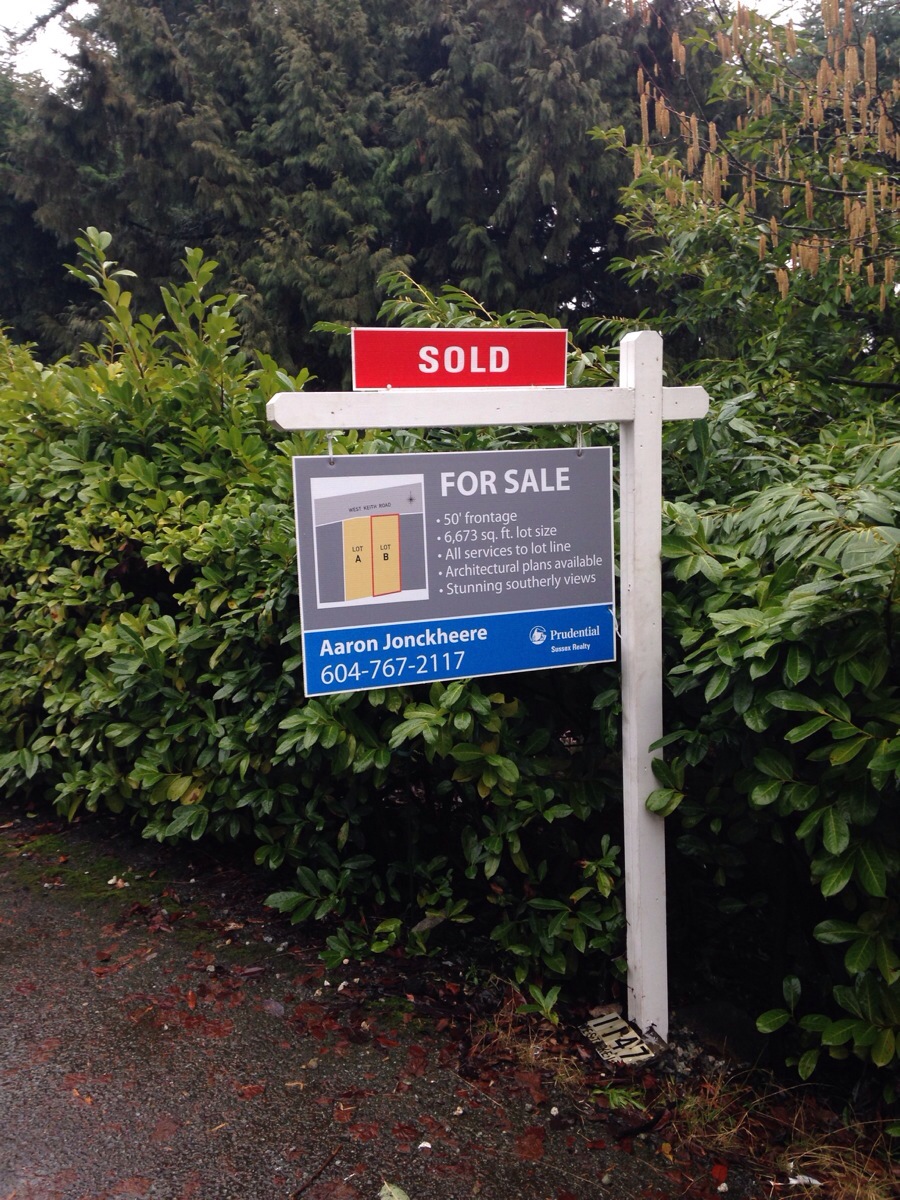
At the end of the day, after a lot of tears, arguing, and selfishness to be completely honest, my wife and I agreed to follow the dream of starting a brewery.  The time and financial burden of building a home, in addition to the time and financial burden of starting a brewery proved too much for us to handle.  So we decided to sell both halves of our property instead of just one half, allowing our family to focus on my dream, and bringing to the end another dream.

Think about it from the standpoint of my wife.  Every time I talk about the brewery, I stay up late or get out of bed early, every time we write a cheque to pay for something, every time some asks how things are coming along, and every time I come home to our rental house, my dream is at the expense of satisfaction in her life.  People ask me about the brewery and I get excited, and when people ask Deanne about building a house, she just sees my dream, at the expense of hers.  When people ask what has been the hardest thing about starting a brewery, it is this.

So, to come full circle, I hope one day to be a brewery owner and build my wife a house of her dreams.  It might be a few years before his happens, but I do plan on returning the favour to her for the sacrifices she has made for me.  I can’t think of a more selfless person, and for this I am forever indebted to her.

My amazing wife has given up her dream of building a home on our property, allowing me to start a craft brewery.  Her sacrifice is the ultimate and one that will allow me to stat a craft brewery.

My amazing wife has given up her dream of building a home on our property, allowing me to start a craft brewery. Her sacrifice is the ultimate and one that will allow me to stat a craft brewery.

I have never felt so many different kinds of stress!

One of the things about opening a brewery that you go through is STRESS!  Thats right, a word deserving of capital letters, because it is not something, when you are dreaming of this, that you think about at all.  In fact I had friends and other entrepreneurs tell me about stress, and I always dismissed it, or paid it some superficial lip service about how I was a laid back guy and it wouldn’t get to me.  Well it did get to me over the past month.

What I have realized is there are different levels of stress.  I will try and talk about each and how it relates to starting a brewery.

Instantaneous Stress:  This is the stress that comes out of nowhere, like being late for a meeting, which is very intense and lasts a very short period of time.  Often it is unexpected, and comes and goes before you even realized what the heck happened.  I don’t mind this kind of stress, as I don’t loose sleep at night thinking of how I am going to be late for a meeting the next day because of traffic or not leaving enough time to get there.

Decision stress:  As I have blogged about previously, there are heaps of decisions you need to make when you open a brewery.  Name, bottle size, engineers and architects, size of tasting room, branding, financials, company structure …. you get the idea.  Sometimes, you only have the odd decision to make, but other times you have 5 or 6 big decisions to make and they compound to make the decision even harder.  How do each of these decisions cumulatively effect your business, and will you end up with the company that you thought you would have?

Performance stress:  Ok, it might put a smile on your face, but it isn’t that kind of stress!  This is the kind of stress I feel when I think about me as an individual living up to my expectations, and those of my shareholders, and everyone else that is depending on this business to be a success.  Full stop, I worry that my performance in the day to day operations will be good enough.

Long term success stress:  This is the kind of stress that keeps you up at night.  Will I be able to make money, will I be happy, how will this business effect my personal/work life balance, and will I have any investors that want to be friends with me if this business goes bankrupt?  When you are investing thousands of hours in time, and thousands of dollars without a paycheque, failure is not an option.  I am far too old and far too deep into life to have another “learning experience.”  The only way I can cope with this stress is yoga before bed and exercise.  It seems to be the great balancer in my life, an I hope to always have time for this.

Family stress  I think we all feel this, and it goes without saying; the stress of my families well-being and happiness is more important than anything else.  I love my wife and kids too much to sacrifice their long term happiness.  How will my kids respond to me being gone 12 hours a day for the first year of this business?  How will my wife feel about the same thing?  I think the only way to deal with this is to unplug 1 full day a week, and to pick your spots when you work versus when you spend time with your loved ones.  I only hope I get the right mix!

Beer Nerd Stress:  Thats right, I said it.  I worry about how our beer will be received from the world of beer nerds.  While we are certainly going to sell our beer to everyone that wants to purchase it, I think the opinion of local and abroad beer nerds really matters to me.  I want to make beer that I would be proud to serve to those “in the know”.  Unique, unapologetic, and delicious.  I would hate my brewery to be a company that was put alongside other less than respected breweries.  It would ruin this whole process and take away from my dream to be a respected brewery.

I’ve Got Something to do:  This is the stress associated with having a deadline, and a finite amount of time to complete this task.  This stress is right up there for me.  Its like a real life episode of Chopped.  Recently I ran a couple focus groups on naming my brewery (I will blog more about this later), and the days leading up to the first focus group was intense.  It was 2 days of preparing, emailing, calling, booking, rebooking, re-emailing, buying, printing …. etc.  This is a really hard type of stress to deal with, as any escape from this stress will only put more pressure on you.

The stress of all these things …. In other words the stress of all this stress!:  The last bit of stress that comes to mind, is the stress of all these things.  Cumulatively, all these stresses can stress you out.  This is the kind of stress that can really impact you both in the short term and definitely in the long term.  The only way to deal with it is to stay positive, believe in yourself and those around you, and to make lists.  Ok, maybe there are some other ways also, but every person is different, and I am certainly one that falls into that category.

My next blog will focus on the naming contest, and the 3rd stage of that process.  I hope that we have our list of 3 names in the next couple days, and then pass this out to the world for their opinion.

Raising Money …. Almost there

This part of starting a brewery involves no glamour, lots of rejection, and takes a thick skin. Most importantly, looking for investors takes patience.  Sometimes, the last thing I want to do is is take time away from the Brand Guide, Business Plan or other more ‘fun’ projects (OK I’ll say it, liquid research) to focus on this.  There seems to be a lot of people interested to know more, but to have ongoing discussions with them, means reducing the number of people who actually want to make an investment.

You see sharing your business plan, and your thoughts on everything from Marketing to Financials is like exposing your inner-most thoughts on business and branding.  Inevitably, we all have different viewpoints on these items, so there are things about my business plan that some people jive with, and other parts that turn people off our business.  Likely, if you are reading this blog you are a fan of craft beer; so explaining the market, how it’s growing and what the future holds is easy …. like selling candy to a kid.

However, about 75% of investors that read my plan don’t know a lot about craft beer.  For instance, they think Granville Island or Sierra Nevada is craft, have never heard of many of the smaller craft brewers, and don’t seek out establishments that cater to craft beer.  Some investors have even approached the business plan from a pure business standpoint.  They ask, “Why wouldn’t you brew more beer, sell it cheaper, market the crap out of it, and have higher sales?”  As you can imagine, this is not what I have in mind for my brewery! #FollowMyDreams

Most of all, you are asking mostly friends and family to invest their money in your dream.  This simple fact means that people start out skeptical in the first place.  We all know someone who is offering some multi-level marketing investment, or someone else who is selling diet pills or a weight loss plan.  Personally, I find this annoying, especially when its very in-your-face.  Also, people work hard for their money, and there is nothing worse that pissing your money away on a bad investment.  All of these things stick in my mind when I ask people to part with their hard earned money.

The net sum has been very positive.  I feel lucky to be based in Vancouver with this dream, as craft beer is bigger here than most any other place in Canada.  From a Canadian perspective, craft beer in BC is very sophisticated and has set the standard for many years now.  The Canadian Brewing Awards is littered with BC breweries winning gold medals over the past 5 years.  I just have to keep reminding myself that this opportunity is not for everyone.  I have also learned to take the feedback that people give me as not a personal attack, but ways to make our business and prospects for success better.  Ok, sometimes people are just jerks, but thankfully they are in the minority here.  Most people just can’t afford to drop $25,000 on something like this …. living in Vancouver is expensive.

As of today, we have raised over $1 million dollars towards starting this dream.  When I really step back and think about that number, it is a LOT of cash.  Depending on the space we lease, and the retrofit cost involved in making the space suitable for brewing, we will likely need another $200,000 to be fully financed.  I hope that we can find this money within the next few months, as the thought of being so close to connecting with all the investors we need is both motivating and exciting.

I am always open to comments, support and help from anyone and everyone in making my dream of a craft brewery become a reality.  If you happen to have any advice, thoughts on anything about the industry, or any other insights on anything to do with starting a business, please feel free to pass them along.

Thanks for reading this post ….

Making an Offer and Finding the Right Brewing Space

Well its official, we have made an offer on a space in East Vancouver.  This will be our 5th property that we have made an offer on, and I hope that its 5th time lucky.  My friends who know me well, and have been kept abreast of the past 3 or 4 years of this process, are the ones who encouraged me to start this blog, as there always seemed to be so many ups and so many downs throughout the process.  None more than finding a space to call home!

In my opinion, the biggest and most important decision a brewery can make is the space you lease.  Sure other decisions are important:  Like, the name of your brewery, the beers you make, the employees you hire, the way you disperse your cash, and the image you present to the marketplace.  But what I have learned is the space you are going to be married to, for better and for worse, is the most important decision you can make.

For starters, finding a good space for brewing is difficult as the list of requirements is long, making an ideal space unique.  You benefit from having high ceilings (18 feet is ideal), a good water supply, good floors for taking the load of full fermenters, about 400 amp/3 phase power, and solid overhead loading doors.  If the list were limited to just these items, the search would be difficult in itself.

But lets not forget some of the other key items in a warehouse that are important in starting a brewery.  In Vancouver, M2 Zoning is the only commercial zone where brewing is an outright use.  All the other zones (for instance I1 and I2) are conditional use, which means you need to apply for a Development permit from the City of Vancouver.  This costs about $5,000 and takes anywhere from 8 to 16 weeks.  I heard Brassneck took 16 weeks, and I have heard rumours that Bomber brewing got their DP in 8 weeks.  Most importantly, you can’t apply for a development permit until you have a signed lease on a space.  That means you have to take a giant leap of faith you will get a development permit.  Why you ask?  Well inEast Vancouver good quality commercial real estate is so hot, and you likely won’t deal with a landlord who will let you have getting a development permit as a subject of the offer.

The list doesn’t end there …. Another key component is the size.  Small breweries need at least 2,000 square feet, and the size can go all the way up from there, depending on how ambitious the brewery is for sales.  I think a space of about 6,000 square feet seems good for starters, but it comes down to how much beer do you think you will sell?  Will you follow the path of Storm Brewing, and have sales that are modest, and keep the operation small?  Or do you plan on having higher sales, like Parallel 49 Brewing, thus requiring more space for production?  Like everything, there is a direct correlation between the size of the space you lease, and the risk an owner takes.

With the new Tied-House rules in the City of Vancouver, another huge aspect is the Tasting Room and Retail Area within the brewery.  It is hard to explain to people how oppressive the bureaucracy is when starting a brewery, and the ability to have a tasting room on site is huge bonus. It not only allows for a tangible connection with consumers to gauge their opinion and interact with, but it also helps to add a few dollars in sales to the bottom line of a brewery.  As such, the location of your warehouse, along with the design, aesthetic and interactivity with the brewery is huge.

The last big point that comes to mind is scalability of the space.  It costs about $500,000 to retrofit a space for brewing.  In other words, this whack of cash goes to upgrading power, floors, water, pipping, cooler/cold room, installation of brewhouse, offices, tasting room, grain handling, etc, etc, etc.  You essentially never get this money back, as its an investment you make in the landlords building.  Hence, its important that you find a space that works now, but also for 5 and 10 years down the road, as you need to avoid having to move spaces because you have outgrown your current facility.  This is of course a good problem to have, but at the same time, its important to be mindful of this fact.

There are obviously other factors like the quality of the landlord, the neighbourhood you locate in, the look and feel of the space, and the lease rate you pay.  All of these items go into making a space for brewing difficult.  However, if patience and an ability to pounce on the right space when it comes available are kept at the front of everything, it is possible …. just ask 33 Acres and Brassneck who both did very well with their spaces.

I hope today is the first day in securing the right space for my brewery.