Tag Archives: How to start a Brewery

Best Practices … Writing a Business Plan

I spent the night on Sunday at Hoppapalooza, one of the best events for Vancouver Craft Beer Week, hosted by the amazing Alibi Room.  I had the chance to speak with many amazing people at party, many of whom gave me great suggestions and advice on what choices to make with our brewery.  I was asked numerous questions about our business and starting a brewery, which I found very interesting and flattering.  One of the questions I was asked several times throughout the night, was about writing a business plan.  It is also one of the questions that I get asked most often via email, by way of this blog.

So instead of going on and on about the business plan, what to put into it and what not to put into it, I figured it would be best to just give a few pointers and then a list of important points to consider when creating one.

  1. Start with the end in mind:  Yes, this is one of Stephen Coveys 7 habits of highly effective people, but I have always liked this point.  So in other words, what are you going to use the business plan for?  Your answer to this question will directly effect the scope of your plan.  A plan to just figure out your operations might be a little different than one aimed at investors.
  2. Put more into it, get more out of it:  Our business plan was a real labour of love.  We put excessive amounts of time and energy into our plan, as both Iain and I have personalities that make us overly fastidious about this kind of thing.  So we spent a lot of time making sure that we planned every detail, and projected every scenario, good and bad.
  3. No matter what, this is your roadmap:  We refer to our business plan on a regular basis, and it has become a living document for our business.  The great thing about having a plan is that it also allows any difference in opinion you may have with your partner to be vetted.  Moreover, the roadmap ensures that when you opinion changes in the future on something, you can judge it against a baseline, of what you once thought.
  4. Plan for about 6 months minimum:  I can’t see how you could write a well thought out business plan in less time than this.  Our business plan was a solid 12 months of writing, and then about 2 years of reviewing and revising every component of it.  By the end of the 2 years, our plan had completely changed several times over to become what it is now.  Moving forward, our plan will surely continue to change, and each time, we will take the time to update the details, so that our roadmap stays accurate.
  5. Its all about the financials:  Your cash flow is the most important part of the business plan.  It has to be realistic and it has to prove that you can make money quickly and consistently.  If you financials don’t add up, then you need to re-evaluate what you are doing  and the approach you are taking.  Our cash flow has become a monster, and it is something that without, we would be lost.
  6. Keep it short and sweet:  No matter what, but out all the crap.  Your plan should be no more than 25 pages written and about 25 exhibits.  For your financial projections, create a high, low and medium.  Shoot for the stars with your high projections …. say Parallel 49 or Driftwood.  Aim for realistic on the medium …. say Powell Street or Coal Harbour.  Seriously tank on the low, so you know what could happen …. say Surgenor or other under performing brewery.  The low will get you out of bed at 5am, the high will keep you dreaming of what could be, and the medium is likely where you will end up (I think).
  7. Don’t use we, use your company name:  Maybe this is just a stylistic thing or my personal preference, but you are not talking about you, or your life.  You are discussing a business that you may or may not be a part of down the line.  According to your lawyer and accountant, your business is an entity unto itself, so refer to it that way.
  8. Have sub plans for various facets:  We have a marketing plan that is about 25 pages, and a production plan, that is also about 25 pages, along with a few other plans we are working on.  Each of these detailed plans will be shortened and augmented to fit within your plan.  Just put a note in that section of the business plan, that there is more information if the reader so desires.
  9. Non-disclosure:  You may be handing out your business plan more than you think, so you will need to decide who needs to sign a NDA and who doesn’t.  From what I read, anyone that is a seasoned investor, don’t bother asking them to sign one.  It will be insulting.  But for others who are already in the business, or locals who you might think will tell the world what you have planned, it is your call.  We really never had anyone sign our NDA, other than some local brewery owners who we were going to partner with (but didn’t) several years ago.
  10. Prepare a presentation:  Maybe not if you don’t need any investors, but for those of you who need outside investment in your brewery, create a power point presentation of your plan, and summarize the key points.  Make sure you let the people know what is in it for them.  They will always want to know what they will get in return for allowing you to use their hard earned money.  Practice your presentation over and over, until you feel at ease.  Make sure you try it out on a few people before you go to any actual investors.
  11. Prepare to get rejected:  I didn’t track all my failures as much as could have, but I will tell you that I met with about 50 people over the course of 18 months, and we have only about 10 investors in our brewery.  That meant I had a 1 in 5 success rate.  You may be much better than this, but no matter what, expect some people to pass on your opportunity.  Don’t take it personally, ask a lot of questions why they didn’t go with you, and learn so that you can minimize this moving forward.
  12. Be proud, positive and confident:  I am overly realistic, so one of my biggest challenges was that I didn’t sugar coat anything for anyone.  I never promised that we would make it, never promised riches at the end of the journey, so if things did go off the rails, I would have my conscious clear.  However, you can still be proud and positive about what you are doing.  In fact, this is super important.  No one else will believe in you, if you don’t believe in yourself.
  13. Use a business plan guide:  I have my business plan guide in storage, so I can’t tell you which one I used, but be sure to have a guide that will help walk you through each of the key facets of your business plan.  A guide explains all the details that you need to know, and will help you determine how to best write your plan.  I have written a total of 4 business plans in my lifetime, and I still wouldn’t consider writing a business plan without some sort of guide to help write the plan.

So that is my best practices on writing a business plan.  I will gladly send you a copy of my business plan, should you want to see what we created.  Just send me a message.  Best of luck, and writing a business plan can be a lot of fun, so make sure you prepare yourself for an amazing journey.


 

Best Practices 1st 1/2 of Mechanical

Having just got through the Mechanical portion of the construction of our warehouse, I feel like there is a lot of information that is crucial and really important for future reference.  In all, this is probably the part of the job that is filled with the most grunt work.  It is messy and for the most part thankless work that requires lots of lower back strength and willpower.  There are times that I wanted to quit for the day, but what served the process really well was to persevere and make it to the end of the day.

Like every major step of this process, I have learned much about this portion of the construction process, and I have completed a chart below that helps to summarize the key learnings.

  1. Pick the Right Mechanical Contractor:  This is likely the most obvious item on this list, but the one that needs the most time and attention before things start.  Make sure you work with a mechanical contractor that is willing to work with you throughout the process.  Things like are they going to dedicate their time to the job, are they using 1 man or a 3 man crew, or even how many days of work do they expect the sections to take.  Knowing some of the details, will help your expectations be in line with reality
  2. Make sure you look for ways to cut costs, and make sure to negotiate these reduction in fees can go into your pocket and not your mechanical contractor:  By this I mean, if you want to change something, like a trade waste interceptor or location of a drain, the expectation is that they will not overcharge you for this.  You will need to talk about items that could change down the road.  We have changed a lot of stuff.  Hot water tank, locations of drains, flow meter, trade waste interceptor, and a bunch of other small stuff.  What is important is that we talked about this early on in the process, and we have hammered out a good deal with these kinds of things.
  3. Get ready to dig:  You can hire someone to dig, and the cheapest we could find labour through someone else is $25 per hour all in.  If you want to hire someone off the street, they are not going to be covered by WCB, which is a big no-no, and more importantly if something happens, you are screwed.  So this means that to save money you are going to be working that shovel.  Between Iain and I, we spent over 150 hours combined on the shovel, which by my quick math has saved us about $4,000.  It doesn’t seem like a lot, but in the grand scheme of things, that is $4,000 more we have for something else.
  4. Get the right size trade waste interceptor:  Getting a TWI too big or too small will mean trouble no matter how you cut it.  If you get one too large, you won’t have to clean it out very often, but it will be a pain in the ass to install into your floor.  A TWI that we looked at was over 11,000 lbs, which had a list of issues when you were trying to install.  If you get a TWI that is too small, it might be a lot easier to install, but you will be calling every month to get it cleaned out.
  5. Use a plastic trade waste interceptor:  We ended up going with a plastic TWI which solved all our problems.  It was less expensive that a traditional TWI and it was a lot lighter than a normal TWI, at only 350 lbs.  In fact, it only took of us to lift it in the hole.  Make sure you make the decision on this early in the process.  You don’t want to hold up the process with fretting about a decision.
  6. Get drawings from your Structural engineer early on in the process:  I have written a full post about our issues around a structural engineer, so if you follow my blog you know well our issues with this area.  In short, get your structural engineer on board early, and make sure you agree to a timeline of what needs to be completed and when.  If your expectations are met, you are golden.  If your expectations aren’t met, then you need to take action.  At the end of the day, it is your ass on the line.
  7. Get lots of quotes:  There is more to this aspect of the process than just the mechanical work.  There is laying out of the floor plan, concrete cutting, concrete removal, digging, grading. forming for concrete, installation of rebar, drilling of holes for rebar, packing holes, filling with dirt, compacting, and likely more and more digging.  You can choose to do some of this on your own or you can pay someone to do it all.  Our advice, save some money and do it yourself.
  8. Don’t forget about the flow meter:  I can’t say that I know too much about this, but definitely the city of Vancouver requires a flow meter, located after the TWI, to measure the amount of effluent you pass into city sanitary sewers.  Make sure you include this in your plans when you dig, so that you aren’t left doing additional digging afterwards like we did.
  9. Upgrade the water line:  We didn’t need to put an upgraded water line in, but you will likely be doing this through this part of the process.  I can’t say I know anything about this, but I have heard it costs about $10,000 and up depending on how far the line needs to go.  I am sure its no harder than any of the other digging that happens, it just adds to the amount you are doing.
  10. Tamp the ground excessively:  It is better to tamp the ground more than less, so that you have less movement of the substrate down the road.  This is pretty simple, but it is easy to overlook as the whole process is so grinding.  Just do one extra pass to make sure all goes in well.
  11. Cover up areas near the concrete pour with plastic:  Pouring concrete is a dirty, messy job and the guys that do it, don’t really care about anything other than getting the job done.  We were given the advice to cover areas around the concrete pour with plastic, so that the spray of the pouring wouldn’t get everywhere else.  We are really glad we did this, and it saved us a lot of headaches.  The few areas we didn’t cover we wish we did, as they are sprayed with concrete and we can’t get it off.

Hitting the Wall

Today I lost my shit at about 4pm.  After a week of burning the candle at both ends, getting only about 5 hours sleep a night, and having one of the busiest weeks of the year, I literally melted at about 4pm.  I couldn’t talk, hold a conversation, engage with my wife or kids, or even crack a smile.  The burden of this brewery, and all the associated mental and physical work involved got the better of me.

So instead of writing about this, or anything else, I am going to take the rest of the night off and get some rest.  I had planned to write about best practices for concrete, mechanical and trade waste interceptor, but it will have to wait for another day.

I feel I have been ignoring this blog, so I do feel bad about not writing too much of late, but I hope that next week will be a chance to write more.  Thanks to everyone for your continued support and I hope to have some good articles this week.

The toll this brewery is taking on me

There are so many amazing parts to starting your own business.  Things like never having a boss again, being able to build a business and brand, making choices based on your own preferences and opinions, and how every day is a new and amazing adventure.  These are experiences beyond words and they have helped to make the process of starting a craft brewery all that you think it would be.  The other side of this equation involves many other experiences and instances that are less than glamorous, or things that become worse through this process.

One of these things is the relationship you have with family and friends.  It is not that the business directly effects these relationships, rather the extra time and attention starting a business takes will eat into the amount of time you have for those close to you.  It is a slippery slope to walk, and one that you will often find yourself on the wrong side of.  There are many ways to get back to the other side, but it takes ingenuity and changing the established patterns you have …. and lots of coffee.

For me family is everything.  I love spending time with my wife and kids.  For the most part it is a release from the challenges and grind that makes up starting a business.  However, that can become a challenge when you have a list of 40 or 50 hours of work sitting on your desk.  Things like entering information into Quickbooks, marketing, ordering equipment, budget revisions, brewhouse work, manual labour, meeting with trades people, and even writing this blog.  All these things help to chip away at any sense of release you can enjoy when not at your desk.  In other words, your mind starts to wander when you let it, when sometimes what you need is to forget about the business.  That is always easier said than done.

Starting a brewery also means that you have a LOT less time for family and friends.  Saturdays become work days, early mornings are the domain of getting to-do’s checked off your list and late nights are for preparing for the following day.  Sitting with my wife watching a little TV, figuring out who is working when, or even talking about life seems like something we rarely do anymore.  Life is busy enough with all that is going on, but to think how much time I have taken away from focusing on my life partner is a little alarming.  Same goes for my kids.  I have been accustomed to being there for my kids over the past 7 years.  I pride myself on coaching their sports teams, dropping off and picking up them from school, and helping with the myriad of chores around the house.  All of these things become much harder to do when you are focusing on your selfish dreams.

This selfishness is something we all deal with at some point.  Maybe you are looking for additional work to pay off some bills, or you are back in school trying to get a degree, or maybe you are starting a brewery!  No matter how you break it down, being selfish results in different things at different times in your life.  When you are in your 20’s, focusing on yourself is a lot easier that your 30’s, when family becomes a (really good) drain on your time.  Now that Iain and I are into our early 40’s, the lack of time for family and friends is only made worse by a lack of energy.

So with all this in mind, I should officially take this forum to apologize to my dear family and my amazing friends.  I am sorry that you don’t see me as much, or hear from me as much as you have in the past.  Or when I am around I might be distracted or preoccupied with thoughts of my life.  Just know that during this chapter of my life, my focus has changed and that I hope balance and normalcy will return one day.  Until then, maybe tell me to lighten up or crack a joke when you can, it will help me be in the moment.

An Uncomfortable Decision

Throughout the process of starting any business, you learn quickly to deal with unforeseen circumstances on a regular basis.  Things like missed deliveries, unexpected costs, delays by a government body, missing parts, etc.  Recently we had one of the biggest curveballs sent our way, from the most unlikely of places.  Our Structural Engineer who has been working with us a lot lately, just had a heart attack.

For starters, we wish him all the best in his return to health.  Having worked as a pharmaceutical salesperson, I have learned the effect ill health can have on a persons physical and mental well being.  It can effect different people in a number of ways.  So we wish our engineer all the best in getting back to health after such a traumatic experience.

Let me give you a little context to the situation.  A structural engineer is pretty important on most any building process, as there are lots of decisions to be made around making sure big components are sound.  Things like; making sure our floors are structurally sound, the grain hopper is fastened to the building properly, connecting the new curbs to the old concrete slab properly, and making sure the walls and ceilings are properly built so they can handle a heavy load …. you get the idea.  So having someone that understands your project, and someone that works within your timeline is key.

More importantly, when you are at the point our brewery build-out is right now, a structural engineer and their work is critical in moving things ahead.  For instance, there is a list of about 10 things that our engineer is working on, and without his guidance and advice, we can’t make any progress.

Let me now recap a few of our issues with our engineer and you will see why we need to make such an uncomfortable decision.  We picked our structural engineer about 6 months ago, and like a lot of decisions we make, it was based on personality, a referral and price.  He was not from a company or firm, rather just a guy who works on his own … he is the only employee.  Early in the process of things, he gave us some advice, and it seemed very good and we looked forward to working with him on things.

Fast forward to the day we took possession:  February 1st, 2014.  All of a sudden we needed our engineer to start producing some drawings and work for us, but our emails and calls went unanswered.  We reconnected with our architect over this, and they handled things, allaying our concerns and repointing everyone in the right direction (they are good at this).  As our general contractor kept sinking his teeth into the building of our brewery, he had more and more questions for the structural engineer.

He put these questions to the engineer on a regular basis for the next month, until about the beginning of April, when we really started to worry about not getting drawings and answers on what exactly he was supposed to be doing with certain parts of the brewery.  This time we contacted the engineer directly to tell him our concerns.  He gave us a few small little answers, but nothing concrete.  Fast forward to the last week of April, and it was now critical to get answers.  We needed to know about drain construction, floors, connecting old cement with new, etc., and we still didn’t get or have any answers.

A meeting was planned at the end of April to discuss what we needed, and how urgently we needed it, and it went amazingly well.  The engineer agreed that he was late in getting stuff to us, and promised we would have this information for last Friday.  We felt really good about things and moved forward with a positive attitude.

You can probably see where this is going.  Last Friday came and went, and we received nothing. We were pretty disappointed to say the least.  The bottom line is that we need these drawings for work that is getting done right now, and without them, we are opening ourselves up to major problems.  The biggest of these is a delayed opening, which means we will loose even more money in our first year.

Well the news got even worse on Monday morning, as we learned that this engineer had a heart attack and was in the hospital.  And since he is from a company of 1, there was no way to get anything he has done.  So what would you do?  Do you show compassion and wait for him to get out of the hospital, and let him finish the project …. or do we move in a different direction, avoiding any further delays.  We ground our teeth on this one, but as of yesterday we have moved on with a new structural engineer.

In one way its good, as we get a fresh start with someone who hopefully be a little more proactive on getting things done.  Moreover, in our initial consultation he gave us a lot of really good information and advice, something we didn’t get from our last engineer.  In the another way, moving on with someone else is bad.  We have lost all the work that he completed, there is definitely going to be some bad blood over the bill and invoice for work he has done, but not delivered to us on, and we feel bad kicking him when he is down.

At the end of the day, we need to move this process forward now.  So waiting for our engineer to heal and get better, while the right thing to do, is not something we are doing.  We do wish our contractor all the best, and we hope to recovers and gets back on his feet ASAP.  This is just one of the harsh decisions you have to make when starting a business, one that kind of makes you uncomfortable.


Landing Page Is Live

The process of getting all your customer facing material complete is full of ups and downs, set-backs and great moments.  For some reason, we always seem to be behind everyone else in getting this stuff complete!  If you have followed this blog, you know that things like our name, our logo and our packaging are works in progress.  Some days it feels like we will never get all the the items completed in time for launch which is now less than 5 months away.  Yikes!

This week we crossed of one small piece of our brand off the list:  Our Landing Page.  It was completed over the course of about 12 weeks, and while it is pretty simple, the process was full of change and tough decisions.  In the end, we are super happy with what we ended up having.  If you want to view our landing page, click on this link to be redirected.

Key learnings from landing page development, and web development for that matter:

  1. Start on this sooner rather than later:  Don’t wait as long as we did.  Consumers want to connect with you, so make sure you allow them the opportunity to do that.
  2. Expect 12 weeks start to finish:  If you are anything like us, there will be changes, u-turns, miscommunication, and a few other things that I can’t even mention.  All this makes a rather simple task a lot more of a grind.
  3. Prepare a brand guide:  This is a key step in the process to getting your brand ideal and message known to yourself, and then to others who are going to work with you.  Don’t leave it to a 30 minute meeting to let a web developer get a feel for your brand.  There has to be something concrete they can sit and read, minimizing the margin for error.
  4. It takes a while to see progress:  It feels like trying to get out of bed some mornings.  There are a couple false alarms, there is snooze involved, a little confusion, and a lot of light steps to get going.  Sometimes, after getting going, you just head back to bed and let it go for a little.  Building a website is a LOT like this.
  5. Stay connected with those helping:  No doubt about it, the more leash you give someone, the more likely they are to go down the wrong path and end up at a place that doesn’t mesh with you and your brand plan.  So have regular meetings and ask to see enough information to be kept abreast of things.
  6. Get detailed scope of work:  When you first sit down to finalize an agreement with a developer lets say, you will agree to a scope of work for your project.  If you want to add something down the road that is not in this scope of work, you are going to pay out of pocket.  As such, either agree to a rate for extra work, or budget in 10% of the total hours for misc work.
  7. Speak up: If you don’t say what you do and don’t like, you will not end up with a finished product that matches what you thought you would have.
  8. Balance:  Not sure what else to put as a heading here.  Sometimes you need to let someone else decide what is best for your brand, which goes against your taste or preference.  Others you need to get that person to change direction, against what they like.  It is a balance and one with no prescribed way of moving forward.  Just hope that you, or those you surround yourself with, have enough similarity and differences in opinion for a healthy relationship.
  9. Build from Scratch or use a wordpress:  Thats right, you will need to decide whether your website is built from scratch or uses wordpress as the foundation.  One costs more, but gives you a very custom website, and the other is much less expensive.
  10. Do something unique:  For us, in addition to writing this blog about starting our brewery, we added a webcam to our website, so people who are interested can view what is going on during construction without having to be there.  Just having another website with the usual information is not enough in my opinion.  Craft beer is booming, which is a great thing in so many ways, but also means you need to stand out a little bit.
  11. Brand Continuity:  Make sure that your website reflects who you are, the beer you are going to make, the brewery you are going to build, and what you think you should represent.  If you get away from this, you will end up at a place that is entirely what you don’t want.

So there it is.  Another set of best practices for starting a brewery.  There is so much more to a website than meets the eye, so don’t take this for granted.  Get thinking about this early on, and start much sooner than you think you need to.

Marketing Update – Website, Blog, Social Media, etc

It seems there have been 2 buckets that I have been working in lately:  Fixing the warehouse and building our brand.  I love the physical aspect of working in the brewery, and I am sure you would too.  What I have found is that when you build a company, its hard to see progress and win the little battles that make up the war.  For instance, when it came to picking a name, it took literally hundreds of hours of work and effort, and you don’t see any milestones along the way.  One day you just have a name.  But when you have a physical project like constructing a brewery, its easy to see progress along the way, and I like that.

We have been busy painting the warehouse lately.  The amount of time and energy this has taken astounds both of us.  We have had great help from family and friends who are incredibly supportive of our journey.  Without their help from the get-go, none of this would be possible, and I am sure this is going to continue onwards in the future as well.  Even with this help, we have spent 2 weeks preparing the space for painting and first coat of primer.  I guess that is what happens when you have a 9,000 square foot space, with 19 foot ceilings.

inside brewery pre paint


So when we are not going up and down the forklift preparing walls for paint, and applying paint, we have been busy with organizing what our brand will look like.  That means meetings, meeting and more meetings.  I have come to realize that it is incredibly important to express how you feel in a positive and straight forward manner.  When it comes to the way I feel about something, I owe to my partner and the business to say what I need to say, all the while improving the relationship with my partner and leaving my influence on the business.

We have picked a logo, and it may not be finalized, it will look similar to this.

SF-logo#8-max-res


Online I can understand why people are torn between the 2 logos we had everyone vote on, but when you see them on a bottle printed out, the decision was quite easy.  The text on the other option seemed too small, and didn’t stand out on the  bottle like this logo.  So thank you to everyone for your feedback and input into our decision.  The results were virtually even on our blog and also the Vancity Buzz poll, so at the end of the day, we had to make the decision.  There might be people who strongly dislike our image and brand, and we have quickly come to realize that we are ok with that.  But we have also come to realize that our brand is so much more than a logo.

All of our social media is now live:

Twitter:  Strange_Fellows

Instagram:  strangefellowsbrewing

facebook:  strangefellowsbrewing

We are busy working on our landing page for the website, and it will likely be another couple weeks before we have something up and running.  Until then, the main contact points are the above …. and of course this blog.  As Iain so shrewdly put the other day, he is the one doing all the work in starting a brewery, and I am the one telling everyone about all the work he is doing in starting a brewery.  Seems like a good set-up to me!

Your feedback is always welcome and helps us to know what we are doing well and what we can work on.  Should you think of anything we can do to make this company better, we would love to hear from you.

Another general update on progress and happenings at the Brewery!

It seems like I have been knee deep in the process of starting a brewery, that I have neglected to update the readers on our progress.  From the brewhouse to tanks, and forklifts to logos, there is a lot happening at the brewery, and the level of activity seems to have picked up.  In addition to the office and administrative items that have kept us busy for the past 6 months, you can add in the retrofit of our space to things to do.

For starters, Iain Hill has officially left his position at Yaletown Brewing Company to join operations full time.  For several months Iain has been burning the midnight oil after a long day at the office, and he now has the ability to focus on starting our brewery, which is amazing on many levels.  Finding a brewery (and in my case a business partner and equal) is a huge step in the process of starting a brewery.  Its one thing to be a home brewer like many of you.  You understand some of the components of brewing beer, and you have experience with the lingo and terminology, but its entirely another thing to be in charge of a commercial brewery.  With a qualified partner, the beer we make will be of good enough quality that it will offer us a chance to have success.  If you want to follow Iain Hill on twitter, his account can be found here.

We have sent out tenders for our warehouse to electrical and mechanical contractors.  This has been a bit of a process for us.  When you apply for building permit, you have a sense of where things are going to go, and this is reflected in the drawings your architect prepares for you.  However, when it comes to the technical details of these aspects of the brewery, you engage with mechanical and electrical engineers to complete these drawings.  Getting the details correct on these drawings is critical to getting accurate quotes from trades people that will be doing the work.  If you hand over a set of drawings for tender and they change immensely, you will get dinged for additional expenses throughout the build-out phase.  My advice would be to push ahead with these drawings at every opportunity, so that when you get your building permit, you are not at a standstill like we were.  We will literally lose a month from our possible start-date as we were not ready the next step.

Doing things in the brewery that don’t need a permit is also something that is very important.  We have decided to paint the inside walls of the brewery with a marine grade paint, to keep mould from becoming a problem.  Well painting a house is a job, but painting 6 metre high walls in a brewhouse that is 9,000 square feet is a little bigger of a job.  This is something that we really should have started earlier as well, but given the delays in getting started with the rest of the work, we will have this finished within the week.  Once the walls are painted we can move forward with cutting floors open, and getting our brewery ready for building.

If you ever need advice on buying a forklift, I can tell you that we had a great experience and I would love to share it with you.  At the end of the day, when you are spending so much money on everything at a brewery, trying to save money on items like forklifts can go a long way.  We managed to save about $5,000 against our budget, and while that will get sucked up quickly elsewhere, the point is you need to save money when and where you can.  We had a budget of $10,000 for a forklift, charger, and man cage (for doing work on the ceiling of the brewery).  After about 30 hours of work, research and seeing what the options were, we purchased an electric forklift that will hopefully meet all our needs for now and into the future.  Sure we might have to spend money on repairs, but we are not going to lose much money on this machine as it already has depreciated to nothing.  If you are looking; side shift, electric drive, 40 inch forks, 180 inch lift height, and a smart charger that is compatible with your machine are all must haves.

In terms of the voting on our logo, it looks the voting has ended up at 50-50!  After all that, we have a divided opinion on what we should be going ahead with!  As such, Iain and I are going to meet and make a decision on what we should move forward with.  We look forward to making a decision so that we can move forward with other aspects of our marketing.

Our landing page for the website should be up and running in about a week.  I know there has been delays (like everything it seems), but we hope to have an interesting landing page that will continue with giving everyone a sneak peak into starting a brewery and our operations.  More to come on that front shortly.

I have found an individual that has helped me with odd jobs at the brewery so far, and I would recommend to anyone else who is looking at starting a brewery, to find someone with some technical background in general labour … what I mean is find someone to help you that can do some electrical, plumbing, painting, heavy lifting, etc.  We have found a man to help us, and he has been a saviour for us.

From an equipment standpoint, we have ordered our brewhouse and we are very close to ordering our packaging equipment and conditioning/fermenting tanks.  We are trying to determine exactly packaging equipment we want, as the choice we make will help determine our entry point into the market.  If you go cans, you come across as more of a middle of the road company. If you go with bigger bottles (650ml) then you come across as more of a craft operation.  So we are wrestling with what exactly to do, and I hope we can make a decision in the next week.  As for the tanks, we are grinding the suppliers on their price, and hope to get our ideal package within our budget.  We think it is better to go a little bit smaller on the tank farm, knowing that you may run out of capacity quickly, than spend all your money on equipment and have very little left over for everything else.

Thats it for now.  Should there be anything else you want an update on, as always, let me know and I will include it for my next blog.

Success … Building Permit has been Granted!

For the past week I have had my head down, working on our accounting and driving ahead a bunch of projects that are in need to time and attention.  So this blog has been something that I keep thinking about, but couldn’t find the time or the energy to put towards it.  While we were busy with our heads down, we received some great news:  Our building permit was approved and we are good to start trucking ahead with construction.

This sounds great on paper, only we thought the process of getting a permit would take a little longer, so we don’t have all our sub-trades in place and need to refine a few more of our plans.  Given this, we hope that construction will begin on April 1st, so that we can be open sometime in very late summer or very early fall.

My advice to people who are going through the process of starting a brewery, or any other business for that matter is this:  Don’t take your foot off the gas pedal.  When you lose focus and when you lose the drive to push things ahead, small delays can have a cascade effect on the process.  For example, our dithering on a few specifics around the brewery and tasting room, which didn’t seem like huge delays at the time, effected a bunch of other items.  It delayed our architects in making the changes, it delayed our contractor in getting quotes, and it delayed next steps in the process.  It ended up that a couple days delay in one decision ended up delaying the process by 2 weeks.  Arghh!

To be honest, I thought I would feel more happy about getting our building permit, and while this does put a smile on my face it doesn’t make me jump up and down like getting our development permit did.  I guess the difference is that we knew we were going to get the building permit, it was just a matter of when.  I also think that we just have so much work to do, its hard to take a breath to give each other a high five.

Anyhow, we will keep you up to speed on some of the next steps with our brewery in the coming weeks ahead.  Lots of activity and hopefully we can drive this project ahead to start operations sooner rather than later.

The End of One Dream …

How do you thank someone for the ultimate sacrifice?  OK, we aren’t talking giving up a kidney, or sacrificing their own life in the line of fire, but my amazing wife has provided me with the means to start this brewery.  Thats right, starting this brewery is taking sacrifices from more than just myself and my business partner.

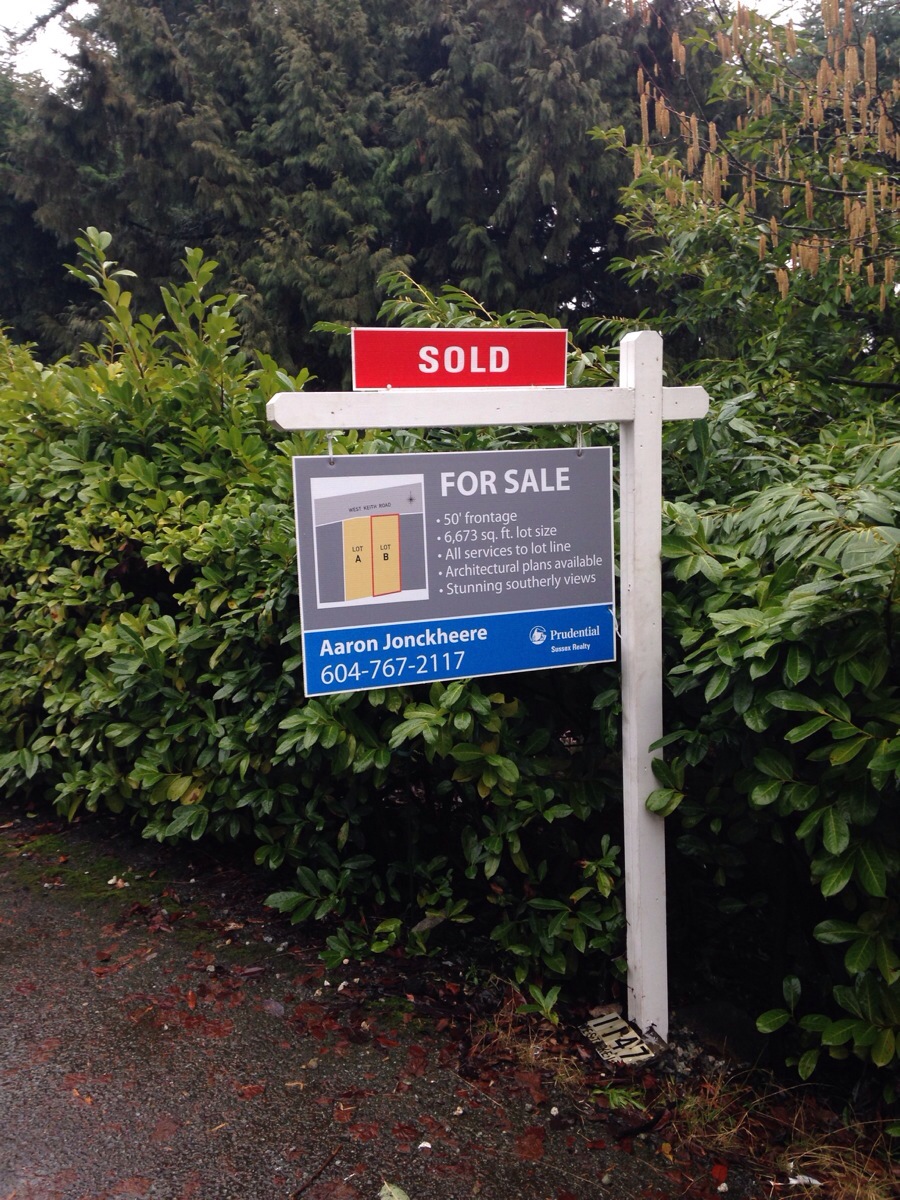
Let me give you a little context.  There is nothing my wife has wanted more over the past 5 years than to build a home.  A place to have memories, raise our family and get away from the daily grind that is our life.  We both envisioned the process as an arduous one, but at the end of it, you would have a home that you helped bring together.  It was her dream, and we worked hard to make it happen.  We bought a piece of land about 3 years ago with the dream of building our home …

Let me take a further step back.  About 10 years ago, I started talking to friends and family about the dream of opening a brewery.  Thats right, this has been a 10 year process for me.  In a way I have become the definition of patience (and for anyone that knows me, this in itself is a little hard to believe, but thats another story).  For the first 4 years, it was a lot of business planning, sampling, and more planning.  The dream seemed very far away  About 6 years ago, I started to get more serious and decided to get my real estate licence, allowing me the time to get out of my full time job, and focus a little more time on my brewery, as being a Realtor allows for a healthy dose of flexibility.  I ended up parting ways with my job in 2011, and have been focusing on real estate and starting a brewery for the past 3 years.  As time has moved on, I have kept getting more and more serious.

So back to 3 years ago, when my wife and I purchased a property for developing.  We purchased knowing that my brewery dream may or may not come together (it has been 7 years that I was talking about it with no progress after all), so we just went with it, and hoped things would work out.  As you can imagine, we followed down both paths simultaneously and didn’t try to overthink much of anything.  My wife hoped that things would work out with her dream of building a house, while I hoped that things would work out with my dream of starting a craft brewery.

You can imagine where this headed.  About 6 months ago we subdivided our property and were finally in a position to think about building our dream home on one lot and selling the other.  This was a moment that we waited for about 20 months to happen, so it was a great moment for our family.  It was about the same time that things with our landlord got very serious for the brewery space.  We made an offer on our commercial space for the brewery, and we were finally in a negotiation with a landlord.  You see, we had tried unsuccessfully for 12 months to lease spaces, and never got to the point of actually being in negotiations.  The process with this landlord was going so well that we applied for a development permit (what you need to get to be allowed to produce beer … a key step to say the least) with the City of Vancouver before we had a lease in place.

Not knowing how all this would go, we continued forward with the dream of building on our property.  We continued to meet with an architect, and we moved forward house plans to the point where we were ready to build.  We just needed to sell one of the lots and we were ready to start building on the other lot.  Selling anything in the last 4 months of 2013 was difficult, especially a property like ours.

Fast forward to very early January 2014.  We finally found a dance partner for one of our properties.  This meant we could sell a property and begin building on the other.  However, it was also in January that we knew we were going to sign our lease.  So it meant my 2 worlds were colliding and we had no certainty with which to make a decision.  Essentially, do we move forward with selling only one property and hope that we can find a way to finance building a house on the other property, all the while, financing a significant part of the brewery.  If you have been following my blog, you know that I always think Cash is King, so it would be so tough to do both.

At the end of the day, after a lot of tears, arguing, and selfishness to be completely honest, my wife and I agreed to follow the dream of starting a brewery.  The time and financial burden of building a home, in addition to the time and financial burden of starting a brewery proved too much for us to handle.  So we decided to sell both halves of our property instead of just one half, allowing our family to focus on my dream, and bringing to the end another dream.

Think about it from the standpoint of my wife.  Every time I talk about the brewery, I stay up late or get out of bed early, every time we write a cheque to pay for something, every time some asks how things are coming along, and every time I come home to our rental house, my dream is at the expense of satisfaction in her life.  People ask me about the brewery and I get excited, and when people ask Deanne about building a house, she just sees my dream, at the expense of hers.  When people ask what has been the hardest thing about starting a brewery, it is this.

So, to come full circle, I hope one day to be a brewery owner and build my wife a house of her dreams.  It might be a few years before his happens, but I do plan on returning the favour to her for the sacrifices she has made for me.  I can’t think of a more selfless person, and for this I am forever indebted to her.

My amazing wife has given up her dream of building a home on our property, allowing me to start a craft brewery.  Her sacrifice is the ultimate and one that will allow me to stat a craft brewery.

My amazing wife has given up her dream of building a home on our property, allowing me to start a craft brewery. Her sacrifice is the ultimate and one that will allow me to stat a craft brewery.